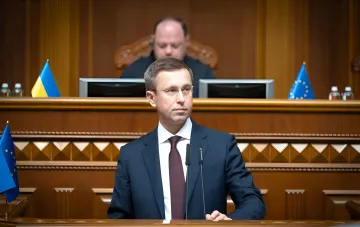
On Friday, October 30, 2026, a Ukrainian delegation including MP David Arakhamia, leader of the Servant of the People faction, and Dmytro Lubinets, the Verkhovna Rada Commissioner for Human Rights, arrived in the town of Oleshky in the Kherson region. Upon arrival, two key areas of work were immediately launched: the organized evacuation of residents and the distribution of humanitarian aid. This was reported by the mission members themselves, as well as by RBC-Ukraine, citing their statements.
Safe Arrival and Launch of Evacuation
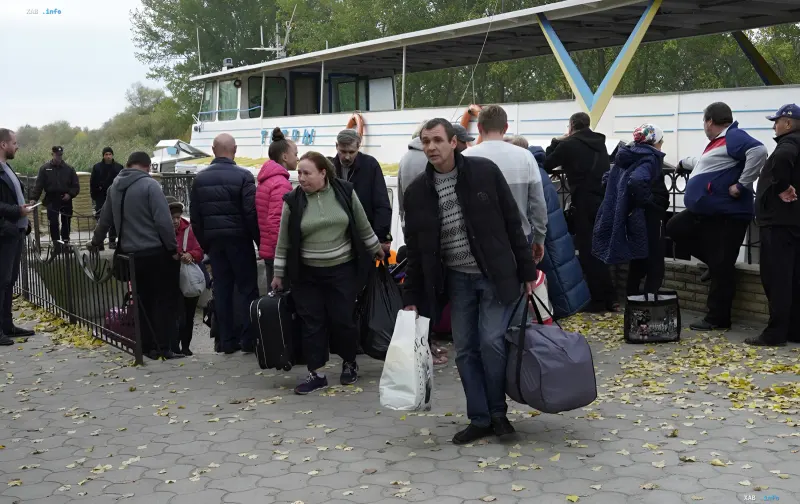
David Arakhamia emphasized in his statement that the Ukrainian delegation had «already safely reached Oleshky.» The MP confirmed that following their arrival in the town, the evacuation of the civilian population began alongside the distribution of humanitarian supplies. Arakhamia also noted that the ceasefire in the Oleshky area remained in effect at the time of his statement and promised to provide further details following their work on the ground. Footage published in the report shows residents with luggage — suitcases, bags, and sacks — moving near the pier and watercraft, which corresponds to the logistics of evacuation via the Dnipro River water area.
Eighty Hours of Silence: What It Means for Residents
Ombudsman Dmytro Lubinets cited a specific figure in his statement: the ceasefire in Oleshky had already lasted 80 hours by the time the delegation arrived and, according to him, continued to hold. This means that active hostilities were not recorded within the radius of the settlement for more than three days, creating a temporary window for humanitarian operations. Lubinets stressed that it was precisely under such conditions that it became possible to safely evacuate residents and deliver necessary resources to them.
The Ombudsman's Work on the Ground: Assessing Needs
Dmytro Lubinets reported that upon arriving in Oleshky, he personally communicated with local residents to hear directly about their needs and determine what specific assistance they required most urgently. «Our main priority is the people who need help. We are doing everything possible to support them and help everyone in need,» the ombudsman stated. This approach involves not only distributing standard humanitarian kits but also gathering data for subsequent targeted funding and logistics.
Mission Context and Next Steps
The humanitarian mission in Oleshky, reported by Ukrainian officials, fits into the broader context of evacuation operations in frontline and temporarily occupied settlements of the Kherson region. Oleshky is located on the right bank of the Dnipro River and in recent months has been in a zone alternating between periods of shelling and ceasefires. The arrival of the delegation, which includes both parliamentary and human rights representation, indicates that Kyiv views the situation in the town as requiring not just an operational, but a systemic response. Arakhamia promised to share details later, pointing to the possibility of additional statements following the day's events.
At the time of RBC-Ukraine's publication, the evacuation and aid distribution in Oleshky were ongoing. Final figures — the number of evacuated residents, the volume of delivered humanitarian aid, and an assessment of infrastructure conditions — are expected in subsequent statements from mission members.