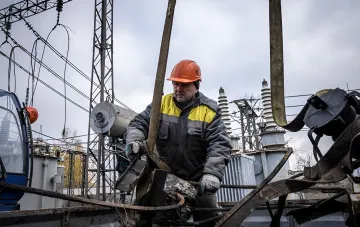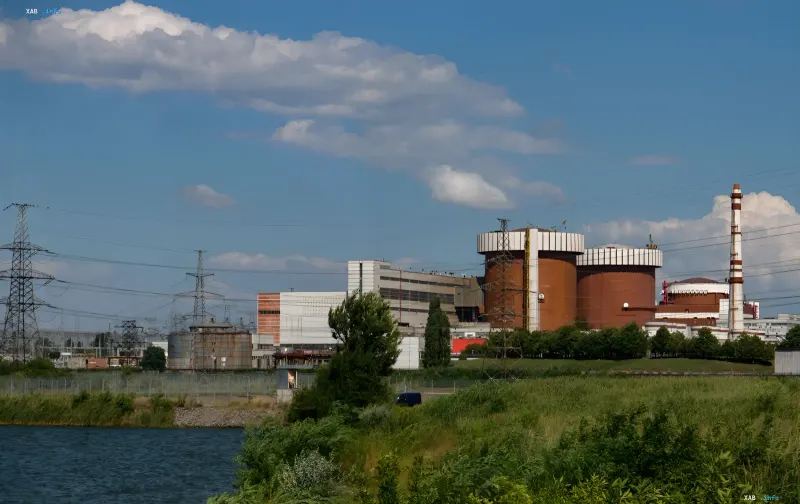
Ukraine's energy system continues to operate under high tension. According to First Deputy Minister of Energy Artem Nekrasov, the country's nuclear power plants have been forced to reduce electricity generation due to damage inflicted on power grids by Russian attacks. As reported by RBC-Ukraine, capacity restoration will be gradual, with the most difficult situation concentrated in Kyiv and the Kyiv region.
Generation reduction at nuclear plants
According to the Ministry of Energy, nuclear plants reduced electricity production amid damage to the electrical grid infrastructure. A ministry official emphasized that capacities will be restored in stages. This means that even after immediate network damage is localized, time will be required to bring facilities back to standard operation mode and synchronize them with the general power grid.
Kyiv and region in the zone of highest tension
The situation is currently hardest, according to Nekrasov, in Kyiv and the Kyiv region. Equipment there has been seriously damaged, he noted, leading to grid restrictions. Emergency power outages in the capital, according to DTEK, have lasted for more than a day: they began on the morning of November 3, and as of November 4, hourly outage schedules are not yet operational. This indicates that supply restoration in the capital is proceeding unevenly and depends on the condition of damaged grid sections.
Emergency outages and six regions without power
Emergency blackouts are being recorded in the Kharkiv region, caused by damaged equipment and voltage drops. According to the Ministry of Energy, six regions remain without power: Vinnytsia, Zhytomyr, Zaporizhzhia, Kirovohrad, Kharkiv, and Kherson. Hourly outage schedules are in effect in most regions, while power limits have been established for the industrial sector. Such measures are typically applied to stabilize network load during peak consumption periods and emergency situations.
Strikes on substations and consequences for cities
The events of November 3 form the context for the current picture. According to RBC-Ukraine, on this day Russia targeted a substation essential for the operation of the Khmelnytskyi NPP with three unmanned aerial vehicles. Also on November 3, most of Kovel was left without electricity following a strike on an infrastructure facility. Mayor Igor Chaika reported that the water utility switched to backup power, while heat supply operates normally. These episodes demonstrate how targeted strikes on energy transmission and distribution elements can affect generation operations and the daily provisions of entire cities.
What this means for consumers and industry
The combination of statements from the Ministry of Energy suggests that Ukraine's energy system will operate under managed restrictions in the coming days. The gradual restoration of nuclear plant capacities, hourly schedules for the public, and limits for industry constitute a standard set of measures aimed at preventing cascading accidents. For consumers, this means ongoing periodic outages, while enterprises must plan operations keeping limited electricity availability in mind.