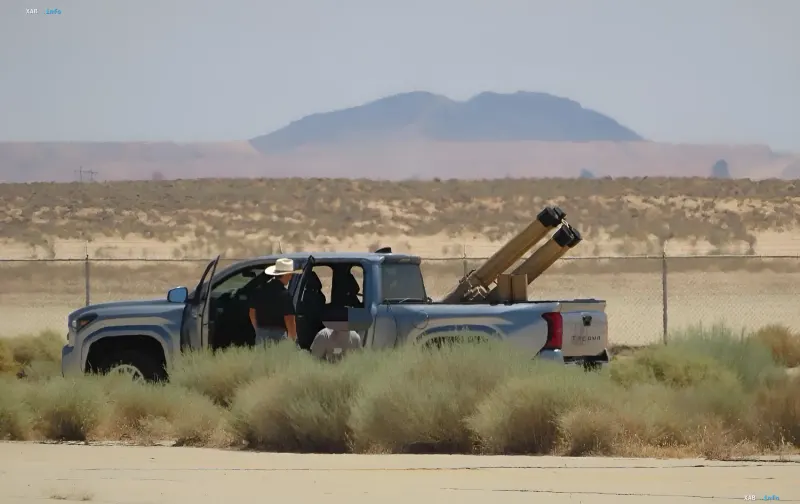
In mid-August 2026, news emerged of a significant breakthrough in counter-drone defense. Thermopylae Aerospace, an American startup founded by Ukrainian engineer Yegor Balitsky, conducted a successful demonstration of its innovative SPART interceptor drone. Tests held in July of this year at Edwards Air Force Base in California confirmed the effectiveness of the new platform against Group 2 class unmanned aerial vehicles.
Tests at Edwards Base: Game of Drones 26-2
The demonstration took place as part of the regular "Game of Drones 26-2" event, organized by the US Air Force's 412th Test Wing in conjunction with the Defense Contract Management Agency (DCMA). According to company founder Yegor Balitsky, the small Thermopylae Aerospace team managed to conduct a full end-to-end demonstration of SPART. This event marked an important step in the integration of Ukrainian technological solutions into the American defense industry.
The "Game of Drones" event is a key platform for testing new technologies in the field of unmanned systems. The participation of a startup founded just a year ago testifies to the high potential of the developed technology and the trust of US military experts.
Technical specifications of SPART: speed and efficiency
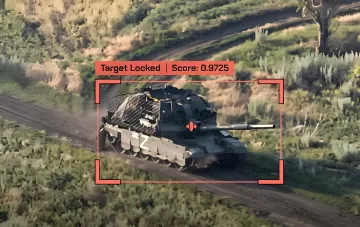
The SPART interceptor drone is a foldable quadcopter designed specifically to neutralize large unmanned targets, including strike drones like the "Shahed." The device is equipped with a thermal guidance system, allowing it to operate effectively in various conditions. SPART can reach speeds of up to 350 km/h and has a target flight duration of up to 20 minutes.
One of the key features of SPART is the partial reusability function. If the interceptor misses its target, it can be retrieved and reused. This significantly reduces the cost of the operation and increases the economic efficiency of the system. Furthermore, SPART can be integrated into various carriers: unmanned aerial vehicles, ground vehicles, naval vessels, and manned machines.
From Ukraine to the USA: Yegor Balitsky's journey
Yegor Balitsky, a self-taught engineer, left Ukraine at the age of 17 following the start of Russia's full-scale invasion in 2022. In June 2025, he founded Thermopylae Aerospace, and by November of that same year, the company had raised $1.6 million in pre-seed funding. Among the investors are well-known entrepreneur Naval Ravikant and the UA1 venture fund, which focuses on supporting Ukrainian projects.
Over the course of a year, the team grew from two to approximately five employees, indicating the company's rapid development. Balitsky emphasizes that SPART was built from scratch in a very short time and expresses pride in his team's achievements.
Contradictory data
While Thermopylae Aerospace positions SPART as a cheaper and more scalable alternative to existing interceptors, experts note that most Western systems still rely on expensive rocket motors. This makes their use against cheap drones economically unfeasible. Additionally, manually controlled systems, which are widely used in Ukraine, depend heavily on operator skills, limiting their scalability.
Nevertheless, some military analysts point out that even with a low cost per unit, SPART may face challenges in mass production and deployment. The question of how quickly the company can ramp up large-scale drone production remains open.
Prospects and impact on the defense industry
The successful demonstration of SPART at Edwards Base opens new prospects for Thermopylae Aerospace. If the company can establish mass production and prove the system's effectiveness in real combat conditions, this could lead to major contracts with the US Air Force and other military departments.
Furthermore, the development of SPART could influence the global counter-drone systems market. Given the increasing use of drones in conflicts around the world, the demand for cheap and effective solutions is only growing. Thermopylae Aerospace, founded by a Ukrainian engineer, could become one of the leaders in this field.