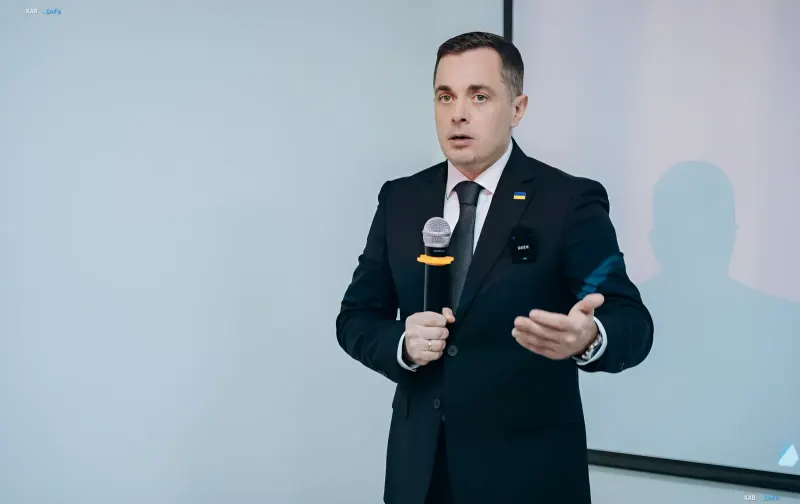
Ukrainian universities are entering the winter season amid regular power outages and shelling of frontline territories. Deputy Minister of Education Mykola Trofymenko explained in an interview with RBC-Ukraine how the state and the institutions themselves are organizing operations during blackouts, who will receive financial support for education, and why universities are intensifying checks on older students. According to him, winter readiness is not assessed abstractly, but by specific buildings and dormitories: the decision to continue face-to-face operations or shift to remote formats depends on the duration of outages and the ability to autonomously maintain utility systems.
Blackouts and Shelling: How Universities Ensure Safety
During a prolonged power outage, a university is obliged to ensure the safety of those remaining in its buildings: pumps, heating, and shelter ventilation can stop without power. For a dormitory resident, this is a matter of living conditions; for a researcher in a lab, it is about safely shutting down equipment. In frontline communities, these risks are compounded by proximity to combat and frequent shelling, while in Kyiv, where large student campuses are concentrated, backup power is also required. The Ministry of Education recommends stopping face-to-face operations where basic safety conditions cannot be met — even a short outage might necessitate this if, for example, the shelter lacks emergency lighting. Universities switch to online learning or declare early breaks if buildings and shelters lose light, heat, or water.
600 Million Hryvnia for Energy Resilience
The state has allocated 600 million hryvnia for the energy resilience of state universities under the Ministry of Education's jurisdiction. Of this, 500 million will go toward capital projects, and 100 million toward project documentation. The official cites energy storage systems and cogeneration units that produce both electricity and heat as primary examples. The Ministry has also issued recommendations on adjusting operational modes during outages: the priority is maintaining systems critical to human safety. Institutional readiness is judged by the actual conditions it can provide during an outage, rather than by proposed plans.
Designated Dormitories for Those with Nowhere to Go
A separate area of preparation involves designated dormitories for students for whom university housing is the only safe place to live: internally displaced students, orphans, and those whose homes were destroyed or remain under occupation. With limited resources, it is advisable to concentrate residency in one prepared dormitory or a few buildings where heating and shift coverage are easier to maintain. For every resident, the conditions must be clear: where they will live, where to seek help, and where they will be moved if it becomes unsafe to remain. Simultaneously, the Ministry reminds that if a university shelter is not closed exclusively for students during classes, it must admit regular citizens, and refusals should be reported to the police and the Ministry.
'Zero Course' Starting December 1 and Master's Grants
On December 1, 2026, the winter enrollment for the "zero course" will begin at 94 universities. Displaced persons from occupied territories, veterans, and those released from captivity will receive grants and financial aid for dormitory housing. For the first time, state grants have also been introduced for master's degree applicants: the base amount is 40,000 UAH, and up to 60,000 UAH per year for future builders and energy specialists. These measures are designed to preserve access to education for vulnerable groups and stimulate enrollment in fields critical to the country's recovery.
Checks on Students 25+ and University Consolidation
Universities will step up checks on students aged 25 and older: verifying whether adult students are truly attending classes and if admission rules were followed, to ensure that education is not used as a cover to evade military service. Another key focus remains the consolidation of universities: merged institutions receive funds from the World Bank for modern equipment that smaller facilities could not afford on their own. Thus, winter preparation is being integrated with a broader strategy for resource concentration and increasing the resilience of the higher education system.