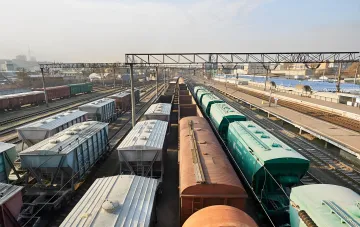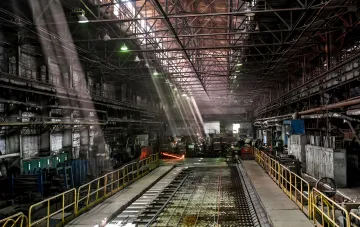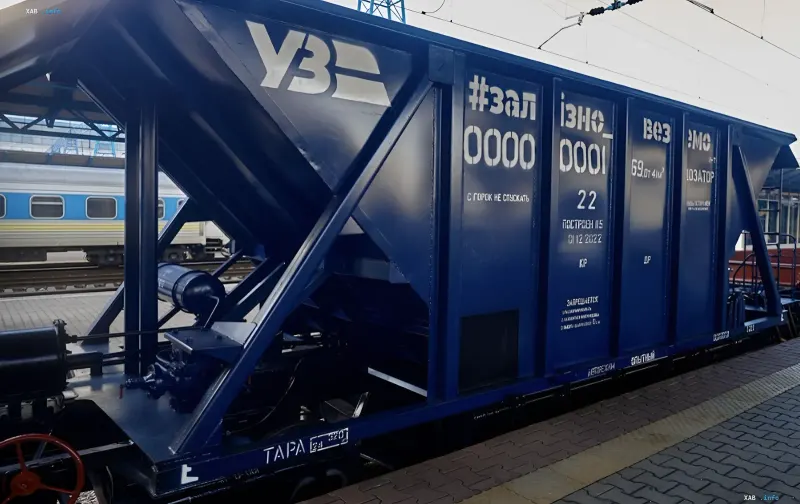
The year 2026 risks becoming an antirecord year for Ukrzaliznytsia in terms of freight traffic volume. According to an estimate by the Center for Transport Strategies (CTS), the annual figure could drop below 130 million tons, compared to 314 million tons in 2021. This implies a loss of nearly 60% of the pre-war freight base, which has traditionally been the company's main source of revenue. As the publication notes, Ukrzaliznytsia itself acknowledges that the decline in traffic volumes has effectively neutralized the effect of the tariff increase that came into effect on August 1, 2026.
The Tariff Spiral: +30% in 2026 and Another +15% in 2027
Starting August 1, 2026, Ukrzaliznytsia's freight tariffs rose by 30%. In dollar terms, they are already more than double the 2021 level. However, this did not yield the expected financial effect: the contraction in transport volumes completely absorbed the revenue gain from the price hike. Meanwhile, another increase of 15% has already been announced for 2027. The problem, as CTS emphasizes, is that each successive increase in the tariff burden makes a portion of production and exports economically unviable: enterprises curtail shipments or shut down, the railway loses cargo and revenues, and then attempts to compensate through further tariff hikes. The metallurgical industry has previously warned that further increases could accelerate the drop in traffic and worsen the company's own financial standing.
Where 180 Million Tons Were Lost: Occupation, Strikes, and Plant Shutdowns
The freight base contracted most severely due to the industrial sector. About 70–80 million tons were lost due to the destruction and occupation of enterprises in the country's east and south. Another 90–100 million tons are attributed to enterprises that shut down or significantly reduced production due to infrastructure strikes, expensive energy, logistics disruptions, and the loss of sales markets. The situation is exacerbated by the blockade of sea ports: exporting via the western border costs 2 to 3 times more than pre-war logistics. More than 20,000 railcars are currently queuing at approaches to border crossings, while actual daily handovers stand at approximately 1,050–1,150 cars per day. Enterprises are simultaneously paying a 30% higher tariff and incurring additional costs from significantly longer routes.
Ukrzaliznytsia's Wartime Losses and the Question of Burden-Sharing Fairness
The material notes that Ukrzaliznytsia's own wartime losses are also substantial: locomotives, tracks, bridges, and traction substations have been damaged. However, as CTS emphasizes, business is not the cause of these losses, so transferring their entire burden onto freight shippers through tariffs is unfair. If this policy continues, some enterprises may simply not survive until post-war recovery. Consequently, the railway will lose precisely those clients who should have restored its freight and revenue base in the future.
Alternatives: Budget Support, Donors, and Optimization Instead of New Invoices
According to CTS, alternatives to a new tariff hike should include other mechanisms. First and foremost is the optimization of Ukrzaliznytsia's own costs and infrastructure. Separately, it is proposed to fully finance loss-making suburban and passenger transport from the state budget rather than at the expense of the freight segment. For suburban transport alone in the 2027 budget, calculations show an additional requirement of about UAH 10 billion on top of the already allocated UAH 16.1 billion for long-distance passenger traffic. Another key solution should be systemic international support for Ukrzaliznytsia during the war: grants, concessional loans, and donor programs to restore infrastructure, rolling stock, and energy resilience. ICC Ukraine previously called for freezing freight tariffs until the end of martial law. The logic, as CTS frames it, is simple: if financial problems are caused by war, port blockades, and infrastructure destruction, they should be compensated through state and international support rather than by issuing new invoices to enterprises that are still managing to operate.