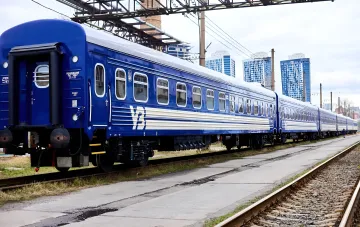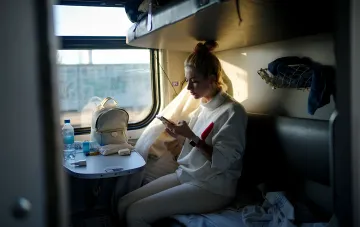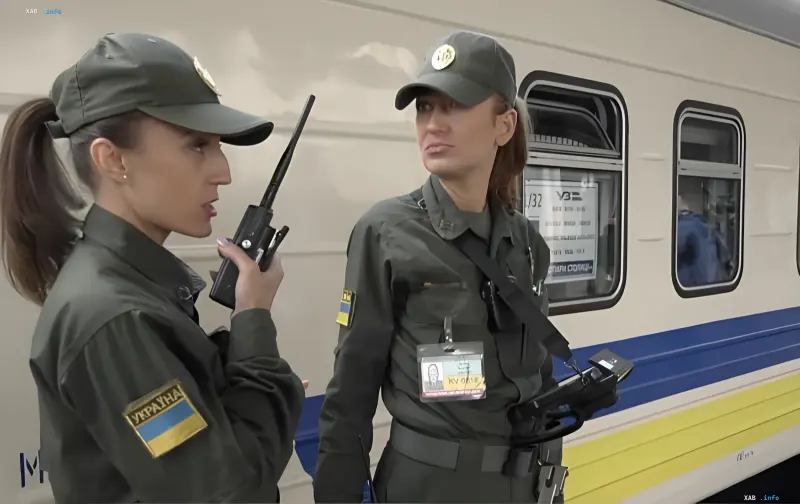
Amidst the ongoing war and heightened risks of terrorist acts, Ukraine's railway transport remains a critical artery for the movement of people. However, the confined space of a carriage can become a trap in the event of a conflict or threat. In August 2026, 'Ukrzaliznytsia' (UZ) updated and presented passengers with a clear, five-step action algorithm in case of violence or unlawful actions by other passengers. The company urges citizens not to tolerate aggression and to immediately use available safety tools.
Technological Shield: Panic Buttons and Video Surveillance
Modern train infrastructure is not just a means of transport, but a security system. In 2026, a significant portion of 'Ukrzaliznytsia's' fleet has already undergone modernization. In new and updated carriages, which make up about 15% of the total number in active use, video surveillance cameras have been installed in common areas, along with special panic buttons. These buttons are located above the compartment door, next to the light regulator, and allow for instant contact with the conductor without attracting the attention of the aggressor. Additionally, an alarm system has been implemented that automatically notifies staff if someone attempts to open a compartment door from the outside without authorization.
Five-Step Conflict Resolution Algorithm
Carrier specialists have developed a step-by-step instruction that should become a 'bible' for passengers in an emergency. The first step is to immediately inform the conductor. They serve as the link between the passenger, the train chief, and the armed guard. If physical contact is impossible, the panic button is used. The second step is fixing evidence. In the absence of a direct threat to life, passengers are advised to record the violator's actions on a phone camera or voice recorder. This will become decisive evidence upon the arrival of law enforcement.
The third stage is crew intervention. After the signal, the train crew arrives at the scene, clarifies the circumstances, and, as a rule, seats the participants of the conflict in different compartments to de-escalate the situation. The fourth step is calling the police. The train chief is obliged to offer to call law enforcement officers to the nearest station. The passenger has the full right to insist on this, even if the conflict seems resolved to them. The fifth step is the detention of the violator. Police arrive at the next stop to draw up a protocol. In this case, recordings from phones or witness testimonies become key pieces of evidence.
Backup Communication Channels and Dispatcher Powers
What to do if the algorithm fails and the train staff does not react? In such cases, passengers can contact the 24/7 'Ukrzaliznytsia' contact center at 0800-503-111 or via online chats in messengers (Viber, Telegram, Apple Messages, Facebook). In critical situations where the threat to life is real, the train dispatcher has the right to stop the train at the nearest station to urgently call the police. This is an extreme measure, but it demonstrates the priority of life safety over the schedule.
Contradictory Data
Despite the presence of clear instructions, there are disagreements in the expert community and among passengers regarding the effectiveness of current measures. On the one hand, UZ management claims the implementation of modern security systems and a clear algorithm for interaction with the police. On the other hand, statistics and passenger reviews indicate that only about 15% of carriages are equipped with modern cameras and panic buttons. This creates 'blind spots' in older carriages where passengers remain without technical support. Furthermore, there is a gap between the theoretical algorithm and real practice: often the police do not have time to arrive at the station, and the train continues moving, leaving the conflict in limbo.
Safety at Stations: New Survival Rules
Safety does not end at the entrance to the carriage. Against the backdrop of constant threats of rocket and air strikes, 'Ukrzaliznytsia' regularly reminds passengers of the rules of behavior at stations. In case of an alarm, passengers are strictly forbidden to remain on platforms or in waiting halls. It is necessary to immediately head to the nearest shelters. Train crews during martial law are obliged to warn passengers of danger, and strictly following staff instructions is the key to survival in conditions where the railway remains a strategic object for the enemy.