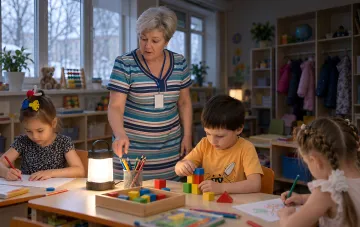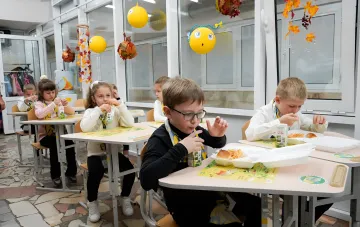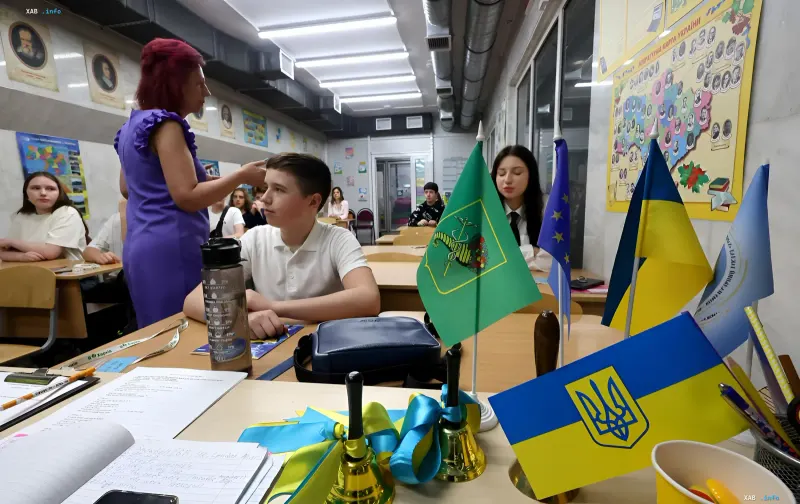
Ukraine's Ministry of Education and Science announced the completion of construction and outfitting of 15 underground schools and shelters in general secondary education institutions. The new and modernized protective structures are designed for 4,980 places, while the corresponding schools collectively enroll 5,282 students. According to the ministry, a significant share of the facilities is located in territorial communities with a high or very high level of security risk, which makes it possible to organize in-person learning even amid ongoing hostilities.
Geography: where the underground schools were opened
According to the Ministry of Education's release, the new and modernized protective structures were outfitted in communities of the Dnipropetrovsk, Zaporizhzhia, Odesa, Sumy, Kharkiv and Chernihiv regions. However, while the introductory part of the ministry's message refers to "seven regions," the list directly names only six. This discrepancy may be due to one region being mentioned in the context of several communities, or to an editorial inaccuracy in the original source. In any case, priority in siting the facilities was given to territories where the risk of shelling and aerial attacks remains the highest.
The financial framework: 5 billion hryvnias in 2026
In 2026, 5 billion hryvnias of state subvention is allocated for outfitting shelters in schools. The funds are directed at the construction, reconstruction and major repair of protective structures, including the completion of projects started in previous years. Overall, between 2023 and 2026, nearly 20 billion hryvnias have been transferred from the state budget to local budgets for outfitting shelters in educational institutions. This year, state funding covers 113 shelters in 22 regions of Ukraine, with priority given to communities with a high or very high level of security risk.
International support and the role of communities
The repair and construction of shelters are carried out directly by the territorial communities. The funding is supplemented by support from international partners: in particular, under the LEARN program implemented jointly with the World Bank, and using the instruments of the European Union's Ukraine Facility. Ukraine's Minister of Education and Science Andrii Butenko emphasized that the state continues to invest in sheltering, restoring and developing school infrastructure so that children have access to quality education in a safe environment. "We want every student to have the opportunity to fully live their school life: to learn together with classmates, to communicate with teachers, to develop their abilities, to find friends and to make plans for the future," the head of the ministry stated.
Current coverage: 90% of institutions have shelters
As of the end of August 2026, according to the Ministry of Education and Science, 90% of Ukraine's general secondary education institutions operating in in-person mode have either their own shelters, access to rented ones, or use the shelter of the nearest educational institution. At the same time, the ministry acknowledges that at 10% of institutions the shelters are only partially suitable. The organization of the educational process in the 2026/2027 academic year, the ministry noted, must take into account the security situation in each specific region.
Contradictory data
The original source (the Ministry of Education's release, relayed by RBC-Ukraine) records an internal discrepancy: the headline and introductory paragraph mention "seven regions," yet the list directly names only six — Dnipropetrovsk, Zaporizhzhia, Odesa, Sumy, Kharkiv and Chernihiv. The exact number of regions covered by this batch of 15 facilities could not be verified through additional independent sources at the time of publication. In addition, a number of Russian media outlets (TASS, "Vechernyaya Moskva," "Ukraina.ru") cover the topic of underground schools within a propagandistic narrative, claiming that in Kherson and Kharkiv "underground command posts are being passed off as schools," or that such facilities are being created "to raise children against the Russian Federation." These claims are not supported by documentary evidence and do not align with the data from Ukraine's Ministry of Education, and are therefore treated within this article as part of an information campaign rather than as a factual source.