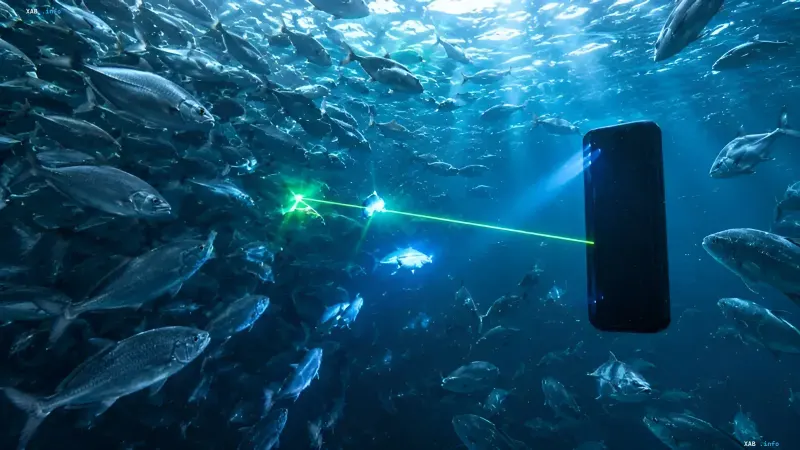
Salmon farming has suffered for decades from parasites — primarily sea lice (Lepeophtheirus salmonis), which attach to the fish's skin and feed on its tissues and blood, weakening the individuals and ultimately leading to their death. Traditional methods of combating parasites — chemical bath treatments, thermal hot-water treatments, and mechanical cleaning of live fish — are accompanied by significant mortality rates. To solve this problem, the Norwegian company Stingray Marine Solutions has adapted underwater laser systems that precisely destroy parasites on the skin of freely swimming fish without catching them from the pen.
The Cost of Traditional Parasite Control
The scale of harm caused by classical parasite removal methods is well documented by Norway's veterinary oversight authorities. Research findings summarized in the FAO AGRIS database show that in a typical pen holding 150,000 fish, average mortality within two weeks following hot-water thermal treatment reaches 790 individuals. Mechanical parasite cleaning increases this figure to 928, although results vary greatly depending on the site. To these losses must be added fish deaths directly from the parasites themselves, making the issue economically and biologically significant for the entire aquaculture industry.
How the Underwater Laser Module Works
Each Stingray unit is a submersible module equipped with multiple cameras, LED lighting, sensors, and a laser emitter. Stereo cameras capture images of passing fish, and software with machine learning algorithms recognizes parasites on their skin: adult male sea lice reach up to 6 mm in size, and females up to 12 mm. To increase contrast between the parasite and the salmon skin, blue lighting with a wavelength of 450 nm is used. Once a target is detected, the system directs a laser beam at it with an intensity of up to five pulses per second. The underwater module also features its own propulsion system, allowing it to be remotely rotated 360 degrees, ensuring a view of the entire pen.
Scale of Deployment by 2026
The project began development by Stingray Marine Solutions about ten years ago. By 2026, more than 3,000 such systems had been installed along the coastlines of Norway and Iceland. The underwater robotic laser installations provide round-the-clock monitoring for approximately 112 million salmon and trout. Accumulated operational experience allows for a preliminary conclusion about the undeniable benefits of the development for the industry, although analysts consider final generalizations premature.
Efficiency and Limitations of the Technology
A study of Norwegian fish farm data for 2023 showed that sites using laser treatment had a 50% lower probability of needing additional parasite treatment within a week. At the same time, the average number of sea lice on the fish remained the same or lower than at sites without such installations. However, earlier studies revealed a strong dependence of results on pen operating conditions, which does not yet provide a reason for universal implementation of the technology. Cases of fish eye damage by lasers have also been reported, which reduced their quality of life and weight gain. The method has proven to be workable, but clearly has flaws that the industry continues to address during operation.