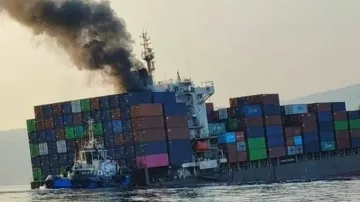
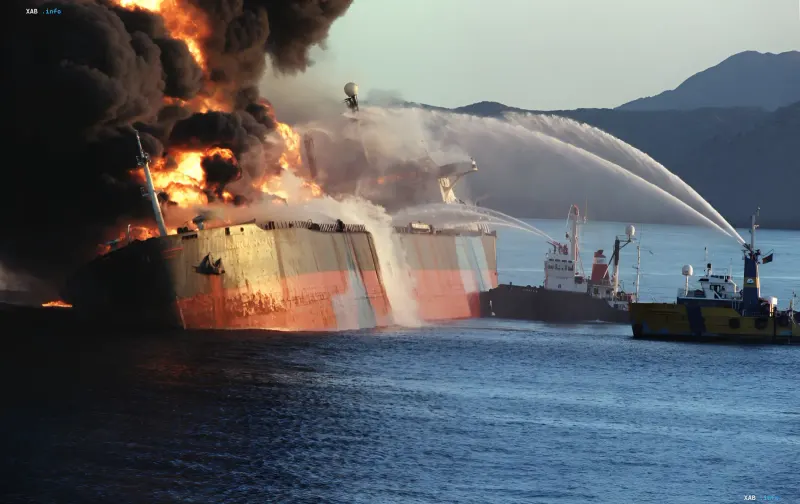
In the early hours of October 2, 2026, another maritime emergency occurred in the strategically vital Strait of Hormuz. An unknown projectile struck a commercial tanker, igniting a severe fire on board. The incident unfolded against the backdrop of a fragile and unstable regional truce, as well as renewed diplomatic efforts by international mediators to bring Washington and Tehran to the negotiating table.
Incident Details and Official Response
The initial reports regarding the attack came from the United Kingdom Maritime Trade Operations (UKMTO). Notably, the information was not relayed by the vessel's own crew, but rather by third parties—other commercial shipping vessels operating in the area. According to preliminary official reports, the crew of the attacked vessel is entirely safe, with no immediate threats to their lives. No information regarding potential oil spills or widespread contamination in the Gulf of Oman and the Strait of Hormuz has been reported thus far.
Contradictory Data
While the UKMTO reported a minimal amount of verified details, emphasizing that the vessel's name, flag, and the specific orchestrators of the attack remain unknown, regional and international monitoring groups continue to compile fragmented reports. Several Middle Eastern and Turkish news outlets indicate that the incident occurred in close proximity to the coast of Oman, although official confirmation of the exact coordinates from military authorities has yet to be issued, giving rise to various theories regarding the origin of the munition.
Regional Context and Consequences
The attack on the tanker comes at an exceptionally critical time for global energy markets and supply chains. The armed standoff between the United States and Iran has persisted since late February 2026, marked by frequent closures and blockades of vital maritime chokepoints. Despite an agreement reached in late June to halt reciprocal strikes, a stable and lasting peace in the region has never been firmly established. Experts fear this incident could derail ongoing diplomatic initiatives and trigger a new wave of escalation in the Middle East.