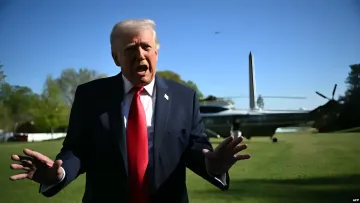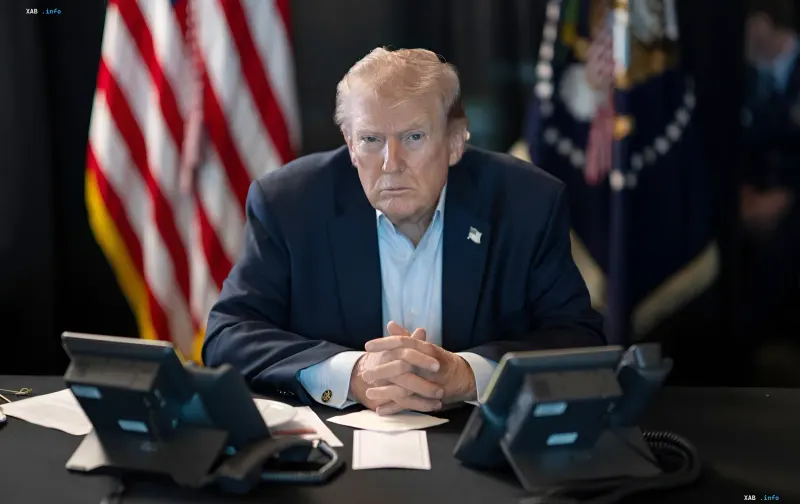
On Thursday, September 14, 2026, US President Donald Trump published a statement on his social network Truth Social in which he characterized Iran as a "state in decline" eager to reach an agreement with Washington as soon as possible. "Iran — a state in decline — really wants to make a deal, and as fast as possible," the American leader wrote. At the same time, he emphasized that the final decision on whether the United States will take part in the negotiation process rests with him personally: "I will decide whether the US takes part in the negotiations — we are open to it."
A diplomatic gesture without specific conditions
Trump's statement, relayed by the Ukrainian agency RBC-Ukraine and confirmed by the Azerbaijani outlet 1news.az, allows for a diplomatic format for resolving the tension between Tehran and Washington, but it contains not a single specific condition of a potential deal. The American president did not say when the talks could take place, what topics would be put on the agenda, or what the minimum US requirements are. The phrasing "we are open to it" leaves room for maneuver: Washington is signaling readiness for dialogue, but it has not confirmed that it has already agreed on the format, the venue, or the delegation.
Context: Iran restores its missile potential
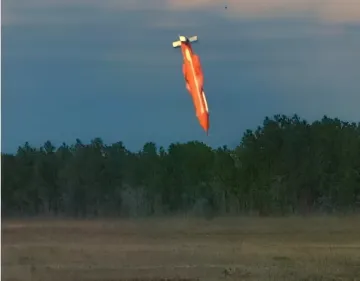
Trump's statement came against the backdrop of reports that Iran has resumed the production of ballistic missiles at underground facilities after strikes by Israel and the US. According to The Wall Street Journal, Tehran is already assembling at least two main types of missiles. In parallel, as the Financial Times reported, Iran has requested modern "Geran" strike drones from Russia, which Moscow has substantially modernized during the war against Ukraine. According to the outlet, Tehran intends to use these unmanned aerial vehicles in a potential conflict with the US and Israel. These data indicate that, despite the rhetoric about a "desire to make a deal," Iran is simultaneously pursuing active militarization.
The Strait of Hormuz and economic pressure
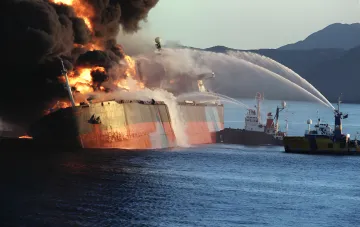
In connection with the Iranian theme, Trump earlier stated that countries whose oil is transported through the Strait of Hormuz are obliged to reimburse the US for the associated costs, reports the Ukrainian outlet UNN. This statement fits into a broader strategy of economic pressure on Tehran: the Strait of Hormuz remains a key artery of global oil trade, and any restrictions on its throughput hit Iran's economy. BBC Russian, for its part, reported that Iran threatened to halt ship traffic in three seas in the event of an escalation by the US, which underscores the mutual vulnerability of the parties in the region.
Contradictory data
There are discrepancies in emphasis and wording between various sources. While RBC-Ukraine and 1news.az convey Trump's words in the context of "Iran's desire to make a deal," UNN focuses on a different aspect — the demand for reimbursement of costs related to the Strait of Hormuz, which sounds like a condition rather than a gesture of goodwill. BBC Russian, by contrast, notes a threatening tone from Tehran regarding maritime communications, which contradicts the image of a "state striving for peace." Moreover, Trump's claim that Iran "really wants" an agreement is not backed up by public statements from Iranian officials, who, at the time of publication, neither confirmed nor denied readiness for talks. Thus, for now the discussion is primarily about the position of one side — Washington's.
What comes next
In the coming days, the key factor will be how Tehran reacts to Trump's public rhetoric. If Iran is genuinely interested in lifting some sanctions or normalizing relations, it will have to publicly confirm its readiness for dialogue, which, against the backdrop of the resumption of missile production and the request for drones from Moscow, looks like a contradictory signal. For Washington, in turn, Trump's decision on whether to participate in the talks could become an indicator of whether he intends to use the diplomatic channel as an alternative to further military pressure or, conversely, as a tool to lock in favorable terms before a possible escalation.