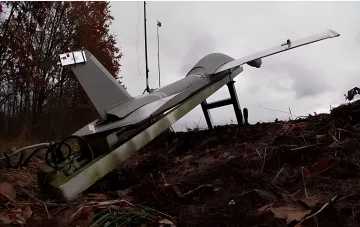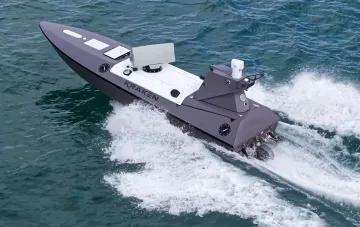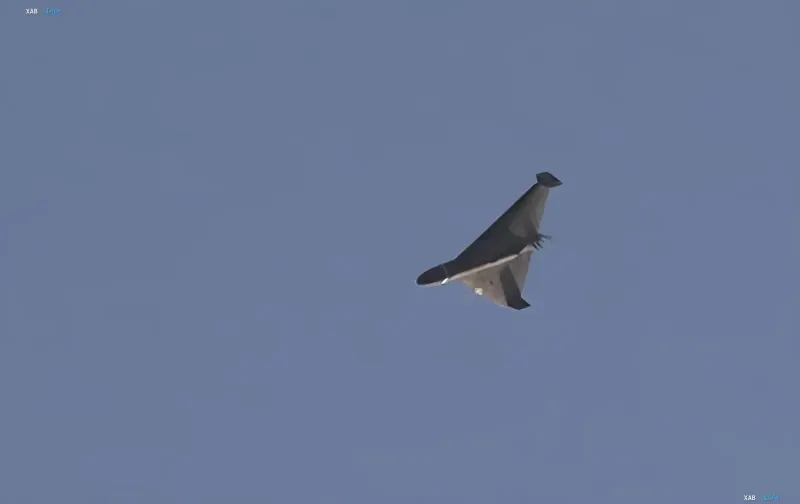
In the autumn of 2026, the Russian army began deploying an upgraded version of the 'Geran-4' jet-powered unmanned aerial vehicles (UAVs). According to the Main Directorate of Intelligence (GUR) of the Ministry of Defense of Ukraine, this updated modification features significant technological enhancements aimed at improving autonomous navigation precision and the effectiveness of strikes against critical infrastructure. Research published on the War&Sanctions portal confirms the integration of several high-tech components not previously used in this drone series.
A Technological Breakthrough in Navigation
The key innovation is the 'MOKH' navigation unit, based on a high-precision magneto-inductive sensor, the PNI5GA from the American company PNI Sensor. This component works in tandem with the SADRA inertial module to minimize gyroscope drift and significantly enhance autonomous flight precision without relying on satellite communications. Furthermore, the 'Susanin' system—an optoelectronic correlation technology—has been implemented. It continuously compares real-time camera imagery with reference maps loaded into the onboard computer, making the drone significantly more resistant to electronic warfare (EW) countermeasures.
Lethality and Manufacturing Shifts
In addition to navigational improvements, the 'Geran-4' is now equipped with a new cumulative-cutting warhead (KRSN). This charge type is specifically designed to inflict critical damage on bridge structures and power transmission line supports by cutting through them with a cumulative jet. Simultaneously, Russia has transitioned to using domestically produced engines, localized in Alabuga, which replaced the previously used Chinese Telefly turbojet units.
Energy Security Context
Analysts at the Institute for the Study of War (ISW) believe these changes are geared toward a massive strike campaign against Ukraine's energy sector before the onset of winter. Moscow's goal is to target already damaged facilities while Ukraine is in the process of upgrading its defenses, including the deployment of new interceptors such as the Ukrainian-German 'Spys' system and the 'Nika' small missile. GUR emphasizes that despite the modernization, the overall electronic architecture remains consistent with previous models in the lineup.