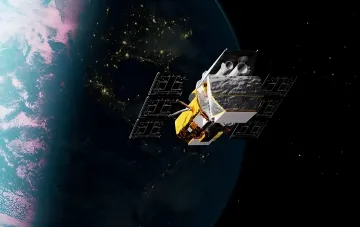
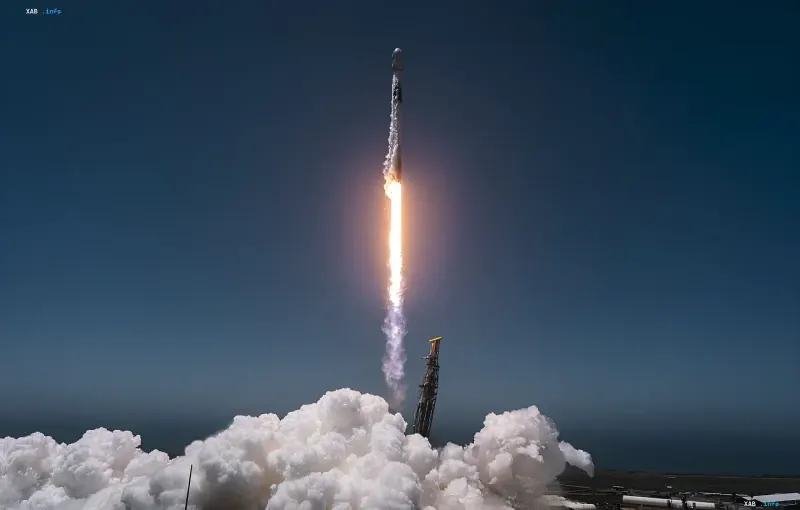
For the first time since 2013, the White House has presented an updated US National Space Flight Policy. The document's key benchmark is an ambitious quantitative target: by 2030, American launch sites must be capable of launching and recovering no fewer than 1,000 space vehicles annually. For comparison, in 2025 US companies carried out a combined total of around 200 launches, meaning the target implies a fivefold increase in the annual volume of operations over the remaining decade.
New target: a thousand launches by 2030
According to the publication cited by XAB.info, the updated strategy focuses less on developing new launch vehicles and more on creating conditions for mass, repeatable launches. The wording of the goal — "launch and recover" — underscores that the full mission cycle is taken into account, including recoverable elements, not just the liftoff from the pad. This reflects the industry's broader shift toward reusable systems and high operational frequency.
Focus on ground infrastructure
The new strategy devotes primary attention to the development of ground infrastructure. The document requires the US Department of Defense and NASA, which operate the federal test and launch ranges, to regularly assess the potential for expanding and upgrading facilities and to build cooperation with private companies. In this way, the state assumes the role of coordinator and guarantor of infrastructure availability, while the actual launches remain the responsibility of commercial operators.
Air corridors and logistics
A separate section of the document is devoted to integrating space launches into the national air traffic system and designating priority air corridors for critical missions. In the view of experts, such measures will be an important step in preventing the logistical problems that will inevitably arise as launch frequency grows. As a vivid example, the case of Warda Space Industries is cited, which, due to difficulties using a test range in Utah, had to land its vehicles at a commercial site in Australia. Under the new policy, unified safety requirements and a development plan for private operators are also planned to be developed.
NASA and the Pentagon: new tasks
NASA is tasked with expanding spaceflight beyond low Earth orbit, including developing a lunar logistics architecture and preparing to send humans to the surface of Mars. The Pentagon, in turn, is instructed to consider space transport services such as on-orbit satellite servicing and to develop sustainable support systems. Taken together, these mandates turn the updated policy into a comprehensive plan that ties commercial launches, government programs, and defense tasks into a single system.
Contradictory data
The essence of the goal — a thousand launches per year by 2030 — is confirmed by all verified sources without discrepancies in figures or timelines. At the same time, there is a terminological difference in how the document is presented: in the main summary it appears as the "updated National Space Flight Policy," whereas a number of agencies (including armenpress.am and tut-news.ru) describe it as a signed memorandum, and theotherukraine.info and armenpress.am link the decision to a presidential directive. This difference concerns the form and name of the document, not its content. In addition, one source (tut-news.ru) emphasizes that the decision was made against the backdrop of a high level of national debt (around 40 trillion dollars), however this background context is not confirmed by other verified materials and is offered only as an additional assessment.