Research by scientists at the Goddard Space Flight Center (NASA), published in the peer-reviewed journal Science Advances, demonstrates that a number of terrestrial microorganisms are capable of withstanding the harsh conditions prevailing in craters near the lunar poles. As reported by RBK-Ukraine citing the scientific paper, this opens up a new and previously underestimated threat — biological contamination that could distort the results of studying the primary chemistry of the Moon and, critically, Mars.
Humans as carriers: millions of bacteria in every spacesuit
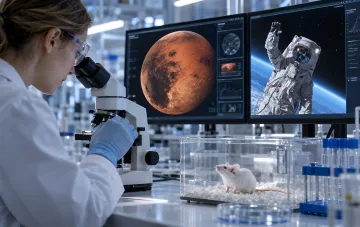
The key finding of the study is that humans are natural carriers of millions of microorganisms that inevitably enter the environment during any expedition. According to the researchers, about a million bacteria inhabit every section of human skin the size of a rubber band; these microscopically leak out of spacesuits and living modules. Even strict sterilization procedures cannot completely eliminate all species: in particular, the fungus Aspergillus niger has previously demonstrated the ability to survive on the outer shell of the International Space Station.
Spectrum of tested organisms and their resilience
In addition to Aspergillus niger, scientists tested a whole spectrum of microbes within the simulation, including the bacteria Bacillus subtilis, Staphylococcus aureus, Deinococcus radiodurans, as well as species of the genus Fusarium. The goal was to determine which of them maintain viability under conditions approximating those on the Moon. The results showed that some of these organisms are indeed capable of entering a state of anabiosis and surviving extreme loads, making them potential "passengers" of future lunar and Martian missions.
Natural "survival niches" in lunar craters
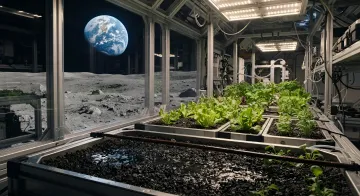
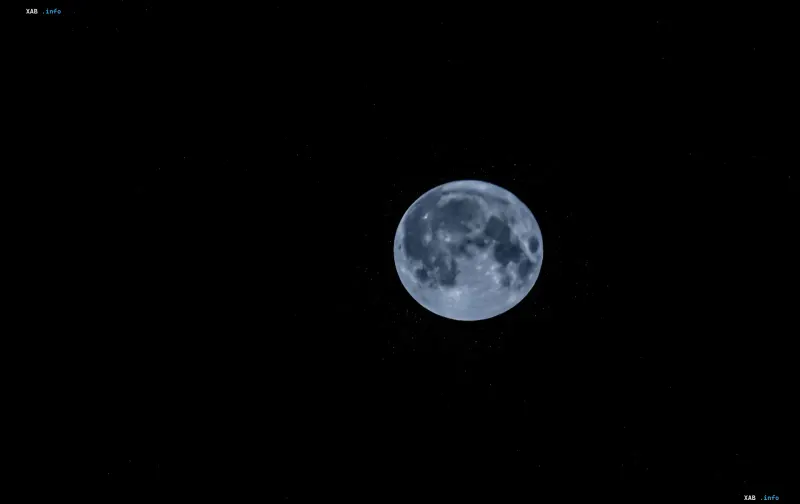
The specifics of the lunar surface create unexpected protection for microbes. Due to the minimal tilt of the lunar axis, the Sun stays very low on the horizon at the poles, creating unique conditions in the terrain. Crater rims, ridges, and even deep boot prints of astronauts form permanently shaded zones that block direct destructive ultraviolet radiation and critical overheating. Modeling based on LRO data confirmed the existence of such "survival niches" in the areas of the Nobile Rim, Connecting Ridge, and De Gerlache Rim craters, where microbes can maintain viability for at least one Earth day.
Contradictory data
Here it is important to distinguish between two different interpretations. On the one hand, headlines in various media outlets (including RBK-Ukraine) formulate the conclusion as "terrestrial life will exist on the Moon," which may be perceived by the public as the discovery of an active biosphere. On the other hand, the authors of the study themselves emphasize that the survival of microorganisms in a state of anabiosis does not mean their reproduction, as there is no liquid water and atmosphere on the Moon. Thus, the issue is not about the development of life, but about the preservation of the viability of introduced organisms — and it is precisely this difference between "survive" and "live and reproduce" that is the central contradiction in the public presentation of the material.
Loss of scientific context and risk for Martian missions
The main practical danger of biological contamination is the loss of scientific context. Introduced terrestrial bacteria may hinder the identification of authentic organic compounds or the ancient chemical history of the lunar satellite. A similar, and even more serious, risk exists for Mars: the discovery of terrestrial microbes there could be mistakenly perceived as a sensational discovery of extraterrestrial life, which would distort the entire interpretation of data from Martian missions. As a constructive step, scientists suggest using the Moon's South Pole as a natural laboratory to establish the real limits of terrestrial biology's endurance in open space before launching missions to other planets.