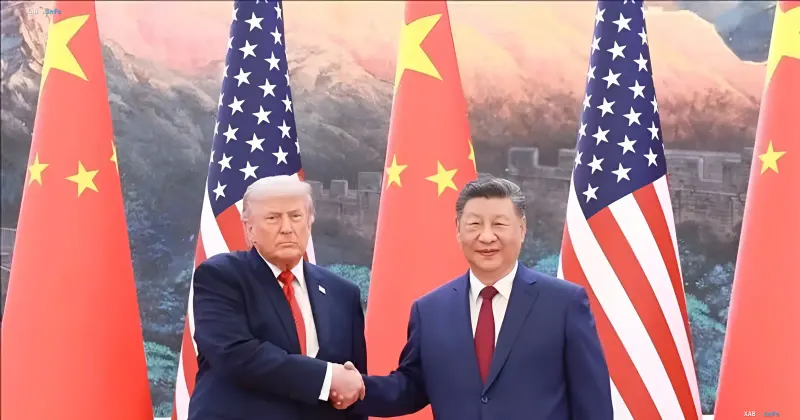
Washington and Beijing are engaged in active negotiations to establish an incident-response mechanism for artificial intelligence (AI), aiming for tangible outcomes at the upcoming meeting between US President Donald Trump and Chinese President Xi Jinping in November. This dialogue is viewed as a crucial step in easing technological tensions between the two superpowers.
Preparation for the November Summit and Background
According to the South China Morning Post (SCMP), technical groups from both nations are holding regular consultations to finalize a framework for AI crisis response. This document is expected to be one of the key deliverables from the leaders' meeting on the sidelines of the Asia-Pacific Economic Cooperation (APEC) summit in Shenzhen. Expert-level engagement intensified following Xi Jinping's state visit to the US in September, during which a bilateral communication channel was announced.
Contradictory Data
Despite official statements emphasizing cooperation, analysts and media outlets point out inconsistencies and major hurdles in the negotiation process. Following the May meeting between Trump and Xi in Beijing, both sides announced formal talks on AI governance, yet the dialogue was repeatedly delayed due to disagreements over the scope and scheduling. Additionally, US officials have accused China of using American AI models to accelerate the training of domestic systems, allegations that Beijing strongly denies.
Expert Assessments and Global Tech Rivalry
Analysts stress that establishing a long-term bilateral mechanism will face significant barriers due to differences in internal governance systems and fierce competition. While US officials and tech companies worry that China is rapidly closing the technology gap, the Trump administration has rejected calls to slow down advanced AI development, relying instead on market competition and voluntary business agreements.
The Shenzhen meeting is expected to provide a platform to strengthen the institutional foundation for AI dialogue. Artificial intelligence is rapidly emerging as a critical arena where Washington and Beijing must demonstrate their ability to maintain cooperation amid strategic rivalry.