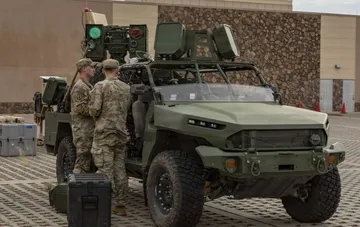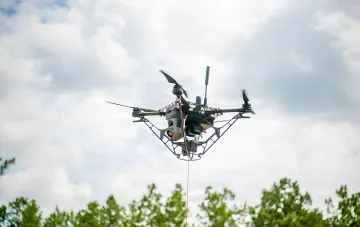
The US Army is preparing to end the existence of a special strike drone unit created in Europe in January 2026. According to RBC-Ukraine, citing The Wall Street Journal, the battalion, which was meant to test new approaches to conducting combat operations and study the lessons of the war in Ukraine, will present its results to army leadership after participating in extensive exercises in Germany in August and September. After that, according to a statement by a Pentagon spokesperson, the unit will "shed its role as a strike drone unit and reorient itself to its core combat tasks as an airborne infantry battalion."
"Return to Basics" Strategy and Personnel Changes
The dismantling of the advanced drone battalion, according to the publication, is part of a broader "return to basics" strategy initiated by General Christopher La Neve, the acting Chief of Staff of the US Army. He is closely tied to US Defense Secretary Pete Hegseth. Meanwhile, the battalion itself became a key initiative of La Neve's predecessor, General Randy George, whom Hegseth dismissed in April. Since La Neve took command of the army, a number of decisions have been made that have affected the US military presence in Europe.
Criticism from Military Experts
The decision to wind down the strike drone unit is drawing criticism from a number of military experts. They believe it will slow the US Army's progress toward an advantage in drone warfare. "Ukraine, in essence, has revolutionized close combat. General George began to understand this, and any failure in his actions would be extremely regrettable and dangerous," said Michael O'Hanlon, a defense expert at the Brookings Institution. The US Army itself has not explained how it plans to accelerate the development of drone warfare capabilities after the battalion is stood down.
Contradictory Data
There are two viewpoints in assessments of the unit's fate. On the one hand, the US Army and a number of analysts (in particular, expert Pyatibratov) emphasize that the battalion was experimental in nature: its task was to transfer its results after the exercises and give up its specialized role, which is interpreted as a natural conclusion of the experiment rather than the "dismantling" of a combat unit. On the other hand, defense experts such as O'Hanlon view the reorientation to airborne infantry as a de facto loss of advanced potential in drone warfare and a step backward in adapting to the lessons of the Ukrainian front. Thus, some see the decision as a rational return to core tasks, while others see it as the loss of a strategic advantage.
Context: Ukrainian Drone Experience Abroad
The US decision coincides with active interest in Ukraine's experience in countering drones in other theaters. In March, Ukraine planned to send a group of military specialists to the Middle East to transfer practical experience in countering Iranian strike drones of the "Shahed" type. Several regional states, including the UAE, Qatar, and Kuwait, expressed interest in acquiring Ukrainian drone interceptors. Meanwhile, Saudi Arabia was preparing for a large-scale purchase of Ukrainian air defense systems: Riyadh was negotiating the acquisition of interceptor drones and electronic warfare systems, and the contract value could reach millions of dollars.