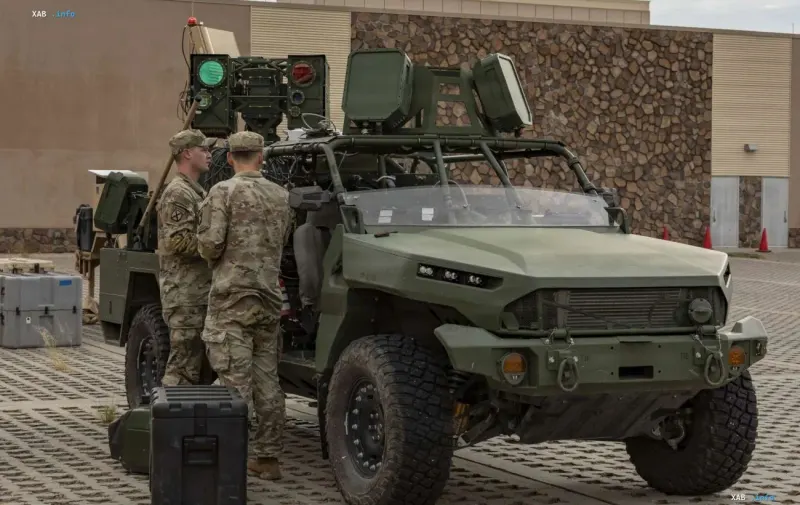
The US Army released new photos on September 22 of tests of the AMP-HEL (Army Multi-Purpose High Energy Laser) directed-energy laser system, mounted on a light tactical Infantry Squad Vehicle (ISV). According to RBC-Ukraine, citing Army Recognition and the official Pentagon and US Army resource DVIDS, the photos were taken at the Fort Bliss range in Texas, where service members were preparing the system for evaluation during exercises.
Tests at Fort Bliss: Who and What Was Being Checked
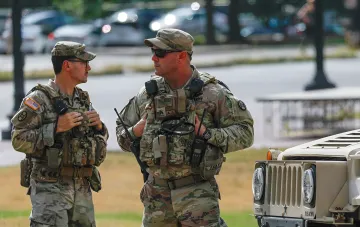
According to available information, on September 16, service members of the 1st Armored Division and the Joint Task Force–South Border (JTF-SB) prepared the AMP-HEL system for testing at the Fort Bliss range. During the exercises, the military assessed the capabilities of the laser complex and, importantly, its interoperability with other means used for operations on the US southern border. Thus, the current tests go beyond a simple technology demonstration: they are about verifying how a mobile laser can be integrated into an overall counter-drone system.
What Is AMP-HEL and How It Is Built
According to Army Recognition, AMP-HEL is a 20 kW-class system designed for countering unmanned aerial vehicles. In the configuration presented at Fort Bliss, the LOCUST laser complex by AeroVironment is combined with a General Motors Defense tactical vehicle. The concept envisions creating a relatively light and mobile platform capable of accompanying units and providing them with drone protection, rather than being limited to defending static objects.
Mobility as a Key Advantage
Mobility is one of the key features of AMP-HEL. Mounting the laser on an ISV should give the military the ability to move the counter-drone asset together with units, rather than using it only to protect fixed positions. The military need to verify not only the laser's ability to engage targets, but also how easily it can be moved, deployed, and integrated into the overall counter-UAV architecture.
Combat Use on the Southern Border
The context of the tests takes on practical significance against the backdrop of statements about the system's combat use. At the end of August, the Joint Task Force–South Border reported that on the night of August 26, US military personnel used AMP-HEL to engage three unmanned aerial vehicles. According to US military data, the drones posed a threat to US service members and customs and border partners, and were linked to cartel activity. It is separately noted that this information is based on statements by JTF-SB and the Pentagon itself.
Broader Context: Other Counter-UAV Systems
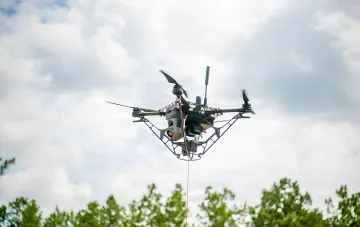
The AMP-HEL tests fit into a broader set of measures to counter small unmanned aerial vehicles. Earlier, US Northern Command (USNORTHCOM) tested Bumblebee interceptor drones by the American company Perennial Autonomy during the Falcon Peak 26.2 exercises at the Yuma range in Arizona. The totality of these steps indicates that the Pentagon is building a multi-layered counter-drone system, in which mobile laser complexes play one of the roles alongside interceptors and other means.