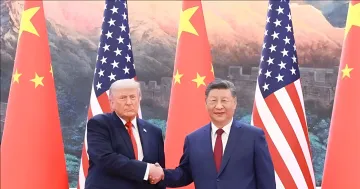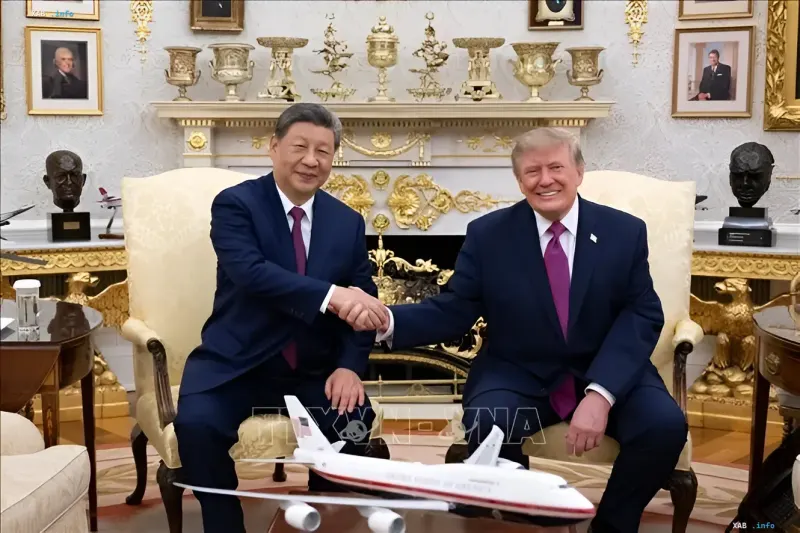
The establishment of a specialized communication channel between the United States and China regarding artificial intelligence (AI) incidents clearly demonstrates that global risk management is becoming an integral part of the technology race. For countries like Vietnam, the practical implementation of strategic tasks enshrined in Resolution 57 lies in harmoniously combining technological excellence and innovation with comprehensive security and protection from the very early stages of development.
Background and Essence of the Agreement
The agreement between Washington and Beijing to establish an emergency communication channel for AI-related incidents emphasizes that the large-scale risks of new technologies require coordination even among fierce geopolitical competitors. Following the historic state visit of Chinese President Xi Jinping to Washington, both sides confirmed the launch of a bilateral mechanism and a specialized dialogue to assess the risks and benefits of AI. The Chinese Foreign Ministry officially announced preparations for the next round of talks in November 2026, while the White House confirmed the development of dialogue regarding what the US administration classifies as 'superintelligence'.
Contradictory Data
Despite the agreements reached on establishing communication lines, the official positions of the leaders of the two countries regarding the tech race itself diverge in their emphasis. US President Donald Trump publicly stated that Washington does not intend to artificially slow down the pace of innovation or share its advanced technological advantages with Beijing. On the other hand, Chinese President Xi Jinping emphasized that powerful states can simultaneously engage in fierce competition and constructive cooperation, preventing the misuse of technology. These discrepancies spark discussions about whether this communication channel is a sincere attempt to reduce existential risks or merely a tactical tool to contain a rival.
Balance Between Innovation and Security
The emergence of the US-China partnership to prevent incidents proves that the safe development of AI does not require mandatory braking of progress, but obliges states to build up risk management capacity. This approach is extremely relevant in the context of Vietnam's Resolution No. 57-NQ/TW, which demands technological self-sufficiency and the rapid introduction of advanced achievements alongside rigorous cybersecurity and data protection. Security is viewed not as an external barrier, but as an organic part of sovereign digital development.
Expert Analysis and Prospects
A key conclusion of modern technological policy is the unacceptability of turning control systems into a brake on innovation. Resolution 57 calls for completely abandoning the outdated 'if you can't manage it, ban it' mentality by introducing flexible pilot mechanisms, supporting venture capital, and allowing justified scientific risks under state supervision. This approach effectively addresses the new challenges of the AI era without compromising economic and scientific growth.