Relations between the United States and China are having an increasingly profound impact on global trade, technological development, and geopolitical stability, requiring all members of the international community to continuously adapt to a transforming world order. This trend is vividly manifested against the background of traditional autumn diplomatic events, when the focus of world leaders shifts toward bilateral and multilateral interaction formats.
High-Level Meeting and the 'G2' Concept
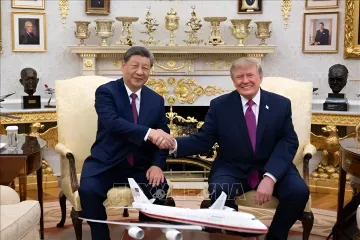
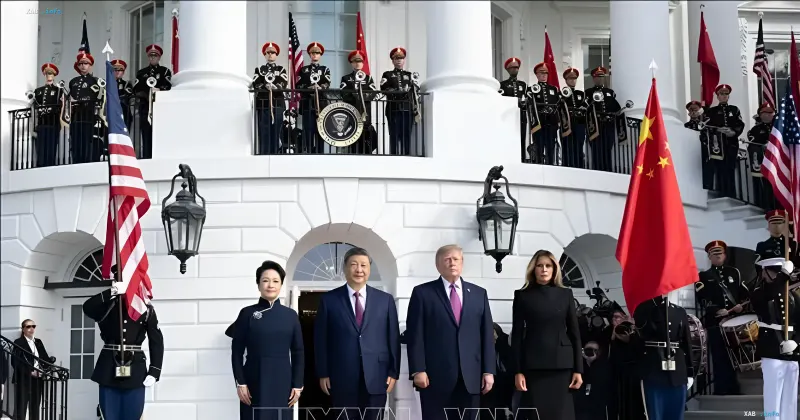
While large-scale UN General Assembly events were taking place in New York, the attention of the expert community was riveted on Washington, where Chinese President Xi Jinping and US President Donald Trump held an important meeting on September 24, 2026. This summit was the second in a series of planned leader contacts following the US president's state visit to China in May of this year.
As the authoritative magazine National Interest notes, this parallel course of events highlights the growing role of an informal 'Group of Two.' Washington and Beijing directly address key issues affecting the interests of most states, while other countries are forced to adapt to the emerging rules of the game. At the same time, according to Reuters estimates, a major political breakthrough following the September meeting of the parties was not expected, despite the wide range of topics discussed.
Regional Influence and Technological Competition
The strategic rivalry between the superpowers is clearly visible in key regions of the world. Beijing is actively using Washington's diplomatic pauses to strengthen its positions in the Indo-Pacific region, the Middle East, and strategic maritime choke points. Simultaneously, artificial intelligence regulation remains a pressing issue, with the US and China discussing mechanistic control mechanisms, drawing parallels with historical arms control agreements.
Contradictory Data
Despite the two powers' desire for direct dialogue, serious discrepancies remain in the information space regarding the effectiveness of such formats. Western analytical centers point to the inevitability of bilateral dictation of the global agenda, while Eastern and independent experts emphasize the critical importance of multilateral UN institutions, whose Secretary-General António Guterres recently advocated for universal AI risk management frameworks independent of the will of just the world's two largest economies.