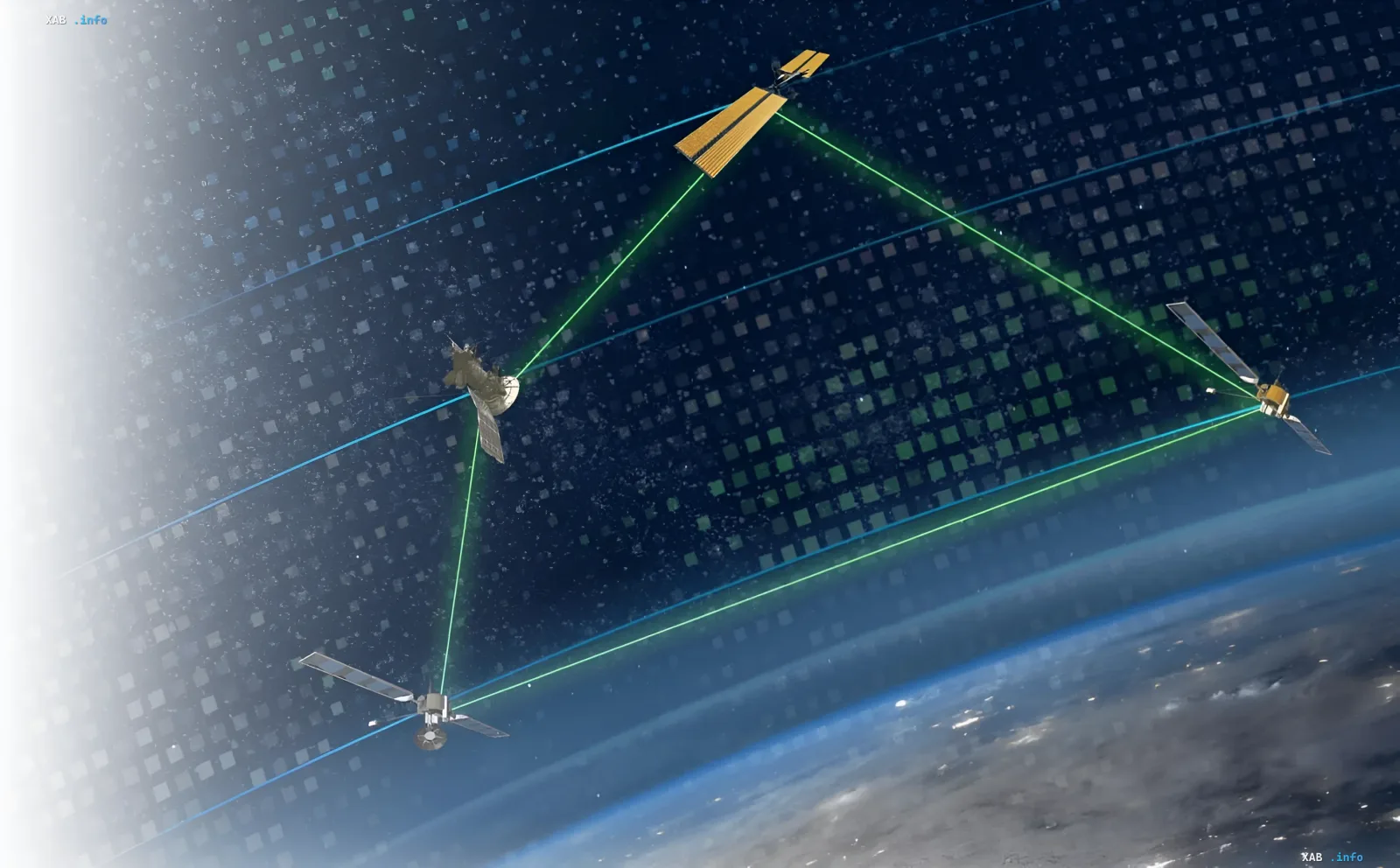
The United States Space Force (USSF) has taken a significant step toward creating a high-speed military network in orbital space. The Command has signed a $22.9 million contract with the private company K2 Space. The goal of the agreement is to conduct full-scale testing of Enterprise Space Terminal (EST) laser communication terminals in real space conditions.
Objectives and Implementation Timeline
According to the terms of the contract, K2 Space is obligated to integrate two laser terminals into its own satellite platforms by 2028. After launching the spacecraft into orbit, engineers must demonstrate successful data transmission between satellites. This will serve as proof of the technology's viability in conditions where spacecraft move at tremendous speeds and are separated by thousands of kilometers.
Enterprise Space Terminal Program
This contract is part of the large-scale Enterprise Space Terminal program, with a total estimated cost of approximately $100 million. The initiative was launched in 2024 with the aim of standardizing space communications. Several major players in the defense industry are involved in the development of the terminals: CACI International, General Atomics, and Viasat.
Although the customer has not yet disclosed exactly which devices will be installed on K2 Space satellites for flight tests, the key requirement is standardization. All solutions are being created according to unified technical standards, which will ensure the interoperability of equipment from different manufacturers within a single network.
Technological Breakthrough
Laser communication is viewed as the foundation for future military space infrastructure. Unlike traditional radio waves, optical beams allow for the transmission of colossal volumes of information. However, the technology requires exceptional pointing accuracy. Satellites flying in orbit must maintain a narrow beam aimed at each other, despite relative motion and vast distances.
Strategic Significance
The project is funded under the Space-Based Sensing and Targeting program. This division is responsible for developing early warning systems for threats, target tracking, and creating the global Space Data Network optical network. The new contract with K2 Space also confirms the deepening cooperation between the Pentagon and the private sector. Previously, the company was selected as a participant in the OPIR Space Modernization Initiative, aimed at modernizing space warning technologies.