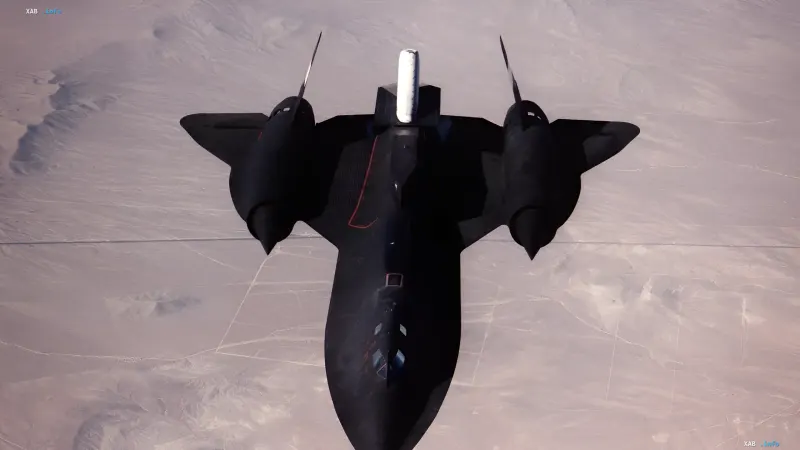
The US National Aeronautics and Space Administration (NASA) is reportedly considering bringing the legendary supersonic reconnaissance aircraft SR-71A Blackbird back into service, nearly 27 years after its final flight. Although the aircraft has long been retired, intense discussions have recently emerged around the airframe. According to international and Indian media reports, NASA officials have initiated informal consultations with former engineers and pilots who once worked on maintaining and testing this unique aviation asset.
Exhibit Relocation and Expert Reactions
The center of attention is aircraft tail number 844, which had been on display as a museum exhibit at NASA’s Armstrong Flight Research Center at Edwards Air Force Base in California since its final flight on October 9, 1999. However, in early April of this year, the aircraft was unexpectedly removed from display and relocated to a hangar previously utilized for the Space Shuttle program. These maneuvers sparked a wave of rumors regarding a potential restoration project.
At the same time, veteran test pilot Mike Relja, who was contacted regarding the project, noted the extreme difficulty of such a task. The aircraft has remained grounded for over two and a half decades, during which moisture, debris, and corrosion could have accumulated inside its engines and systems. Furthermore, in 2007, the US Air Force and NASA destroyed approximately $600 million worth of spare parts for the SR-71, severely complicating future logistics and repairs.
Contradictory Data
While industry specialists point out massive technical hurdles, including the lack of specialized JP-7 fuel and a dismantled maintenance base, NASA officials maintain a reserved stance. The agency acknowledges the historical value and profound public interest in the Blackbird project, but officially declines to confirm plans to resume flights of tail number 844. Conversely, recent statements from agency leadership regarding a new fleet of experimental high-speed aircraft indirectly fuel hypotheses about reviving supersonic technologies.
Historical Heritage and Hypersonic Horizons
Developed in the late 1950s by Lockheed Martin engineers, the SR-71 remained impervious to air defenses for decades due to its ability to exceed Mach 3 at altitudes up to 26,000 meters. Using such platforms in the 1990s allowed NASA to gather invaluable aerodynamic and thermal research data. Renewed interest in this architecture underscores modern American aviation science's drive to overcome current technological barriers in hypersonic flight.