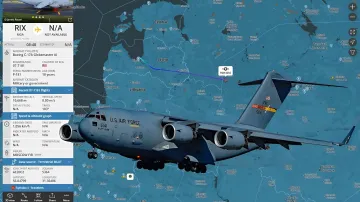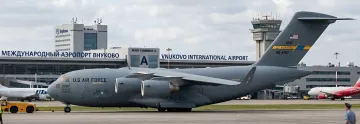
On August 25, an American military aircraft landed at Vnukovo Airport in Moscow. According to real-time flight-tracking services, the aircraft was identified as a heavy military transport Boeing C-17 Globemaster III in the service of the U.S. Air Force. The plane arrived in the capital from Riga, making the flight one of the most discussed episodes of the week against the backdrop of escalating rhetoric between Moscow and Washington.
Route: from Andrews Base via Riga
According to tracking data, before appearing over Latvia, the aircraft departed from the American city of Camp Springs, home to Andrews Air Force Base. This is where the U.S. presidential aircraft Air Force One is based, which further heightened attention to the flight. Thus, the route appeared as a chain of "Andrews — Riga — Vnukovo," and none of the legs was announced in advance by either the American or the Russian side.
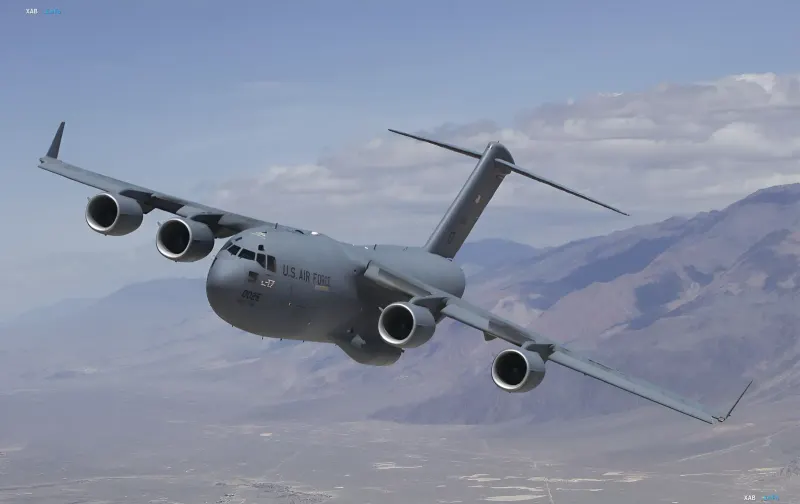
What Is the Boeing C-17 Globemaster III
The Boeing C-17 Globemaster III is a heavy military transport aircraft designed primarily for the long-distance movement of troops, equipment, and cargo. The aircraft is manufactured by Boeing and entered U.S. Air Force service in 1993. Such aircraft are typically used to transport personnel, diplomatic delegations, and oversized cargo, which makes their appearance at another country's airport an event requiring a diplomatic explanation.
The Kremlin's Official Position
Commenting on the arrival, Russian presidential spokesman Dmitry Peskov stated that the Russian authorities have no information about the arrival of a U.S. Air Force aircraft in Moscow. In addition, Peskov said that no meetings with representatives of the U.S. administration are planned for this week either. The wording amounted to a complete lack of awareness of the landing itself, even though the aircraft was already in the airspace over Moscow and had been recorded by independent services.
Contradictory Data
Here there is a clear discrepancy between the versions. On the one hand, independent tracking services and a number of media outlets confirm the C-17's landing at Vnukovo and even record a U.S. diplomatic motorcade in Moscow after the aircraft touched down. On the other hand, the Kremlin's official spokesman publicly states that the Russian side has no information about the arrival of the American plane and does not plan any contacts with Washington this week. In other words, the physical fact of the arrival, recorded in open airspace, contradicts the official position that denies both knowledge of the flight and any negotiations. Neither side has disclosed the purpose of the visit, leaving room for interpretation.
Diplomatic Backdrop: Lavrov's Statements
The arrival of the military aircraft comes against a backdrop of tense rhetoric. Recently, Russian Foreign Minister Sergey Lavrov accused the United States of strikes on Russian territory and began demanding official "explanations." In the same vein, the Russian diplomat put forward to U.S. Secretary of State Marco Rubio a demand related to Ukraine. In such a climate, the appearance in Moscow of a military transport aircraft that departed from the base where Air Force One is stationed is perceived by observers as a possible signal of preparations for closed-door contacts that the Kremlin does not publicly confirm.