The United States Navy has announced a major expansion of its autonomous systems fleet by awarding contracts for the acquisition of 30 new medium unmanned surface vessels. The total value of the deal is estimated at a staggering 1.2 billion US dollars, underscoring the growing role of robotic technologies in modern geopolitics and maritime warfare strategy.
Contract Details and Manufacturers
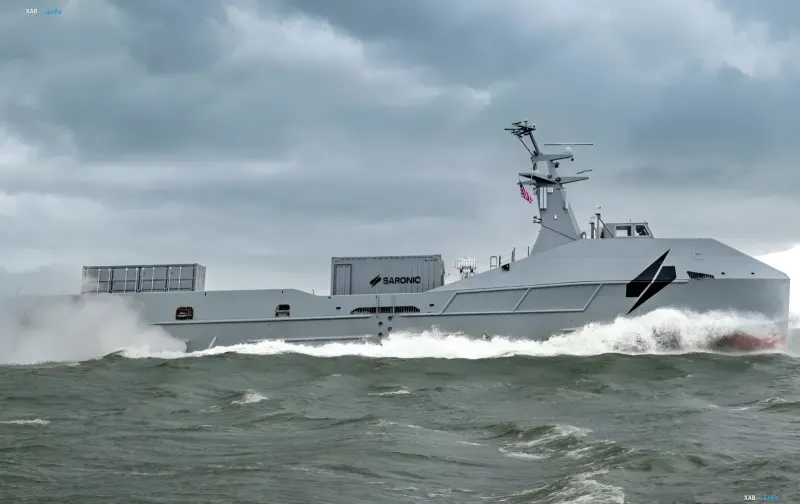
The implementation of the ambitious Medium Unmanned Surface Vessel (MUSV) program is split among three major American manufacturers. According to the agreements reached, Galliano Marine Services (with Edison Chouest), Huntington Ingalls Industries (HII), and Saronic Technologies will each build 10 autonomous vessels. Notably, to expedite the process, the US Navy utilized the special Other Transaction Authority (OTA) mechanism, which bypasses bureaucratic delays and accelerates the fielding of new systems. According to Acting Director of Robotic Systems Chris Miller, the average cost of a single vessel will be approximately 40 million dollars.
Technical Specifications and Capabilities
The new maritime drones are being developed with strict requirements for autonomy and endurance. Production is set to begin promptly at shipyards in Louisiana, with the first fleet deliveries scheduled for 2027. During initial testing, MUSV program vessels already demonstrated the ability to operate continuously for over 26 hours and cover distances exceeding 360 nautical miles. The vessels' design incorporates the use of standard marine containers for rapid payload swaps, ranging from reconnaissance sensors to repair equipment and weapons. Furthermore, the drones are engineered to maintain operability in sea states up to 4 according to STANAG 4194 and withstand storm conditions up to sea state 6.
Contradictory Data
Despite official US Navy statements regarding clear timelines and parameters of the MUSV program, open sources and the expert community have engaged in discussions concerning the realistic timelines for production scaling amidst potential supply chain disruptions. While the American military establishment relies on the accelerated OTA procurement procedure, independent observers point to the complexity of integrating such large batches of uncrewed vessels into traditional fleet operational protocols. Concurrently, global powers, including Russia, are actively developing their own uncrewed surface vessel programs, creating new technological challenges on the global stage as highlighted by official reports from specialized agencies.
Prospects and Global Context
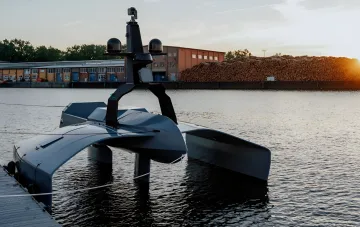
The development of uncrewed systems has become a key trend for the navies of leading world powers. Against the backdrop of US investments in the MUSV program, other actors are also adapting their strategies. For instance, the German company Quantum Systems recently introduced the Seavex and Subvex maritime drones for critical infrastructure protection. This demonstrates that the militarization and robotization of the maritime domain are reaching a new qualitative level, reshaping security rules across the planet's water arteries.