The Office of Foreign Assets Control (OFAC) of the U.S. Department of the Treasury has added the major Russian financial institution VTB — the second-largest bank of the Russian Federation — to its sanctions list. According to a press release from the U.S. agency, the basis for the restrictions was the bank's involvement in circumventing sanctions in force against Iran. The U.S. Treasury's statement emphasizes that VTB provided material, technological, or financial support to the Iranian regime, which, in Washington's assessment, constitutes a direct violation of the existing restrictive measures.
Scott Bessent's Comment and the Logic Behind the Sanctions Decision
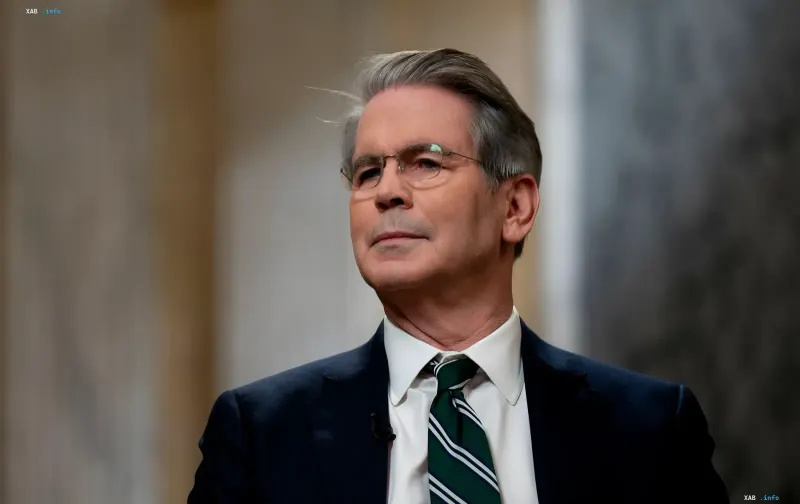
U.S. Treasury Secretary Scott Bessent commented on the inclusion of VTB in the sanctions list, promising that the department would "continue to act against those who provide material, technological, or financial support to the Iranian regime." The Treasury Secretary's statement indicates that the sanctions decision is not a one-off measure but fits into Washington's broader strategy to cut off channels of financing to Tehran. For the Russian financial system, the inclusion of the second-largest bank by assets in the OFAC sanctions list means a serious restriction on its international correspondent business and access to dollar settlement.
Context: Negotiations in Brussels and the Dispute Over Oligarchs
The U.S. sanctions decision was made against the backdrop of tense negotiations among European Union countries in Brussels, where participants failed to reach a unanimous agreement on extending anti-Russian sanctions. The cause of the disagreements was the positions taken on two Russian businessmen — Alisher Usmanov and Mikhail Fridman. According to Radio Free Europe journalist Rikard Jozwiak, France and Slovakia blocked the full extension of the restrictions, demanding the lifting of sanctions against the individuals in question. As a result, according to his information, the European Union extended the anti-Russian sanctions for only one week, while the bloc plans to significantly expand the package of restrictive measures in the future.
Kyiv's Call and Risks to the Sanctions Regime
Kyrylo Budanov, head of the Office of the President of Ukraine, previously publicly called on EU countries not to weaken the sanctions regime so that Russian oligarchs could no longer continue to finance Russia's military machine. His statement came in the context of a discussion about the fact that even a short-term extension of sanctions by one week sets a precedent for further easing of the restrictions. Experts note that the combination of U.S. measures against VTB and the potential expansion of the European package could exert additional pressure on the Russian financial sector, particularly in terms of cross-border settlements and access to Western technologies.
Contradictory Data
Regarding the situation with the extension of EU sanctions, sources record a discrepancy in the presentation of facts. On the one hand, the materials state that the European Union countries "failed to agree on extending the anti-Russian sanctions" due to disputes over Usmanov and Fridman, which could be interpreted as a complete breakdown of the negotiations. On the other hand, according to Jozwiak's data, the sanctions were nevertheless extended, but only for one week, with France and Slovakia formally blocking the full extension. Thus, there is no unified understanding in open sources at the time of publication as to whether a compromise was reached or the negotiations collapsed entirely. Both versions coexist in the media space, and the final legal force of the adopted decision depends on the official document of the EU Council, which had not been published in full at the time the material was prepared.