The US Senate Appropriations Committee, led by Republican Susan Collins, has released the texts of a five-bill budget package for fiscal year 2027. Among the documents is the draft funding bill for the Department of State, Foreign Operations, and Related Programs, which includes $300 million earmarked by Republicans to counter Russian influence. This was reported by RBC-Ukraine, citing a committee release published on the EIN Presswire platform. It is important to emphasize that these are proposed expenditures, not funds that have already been allocated or disbursed.
Budget Package Components and Key Items
The package of five bills released on November 16 sets the spending framework for the next fiscal year. In addition to the $300 million aimed at curbing Russian influence, the State Department and foreign operations funding bill includes $1.8 billion for the implementation of the Indo-Pacific strategy and countering China, as well as $3.3 billion in military aid to Israel, to be administered through the Department of State. Thus, the document links US foreign policy to simultaneous pressure on several 'competitive' centers of influence.
Three Focus Areas: Russia, China, Iran
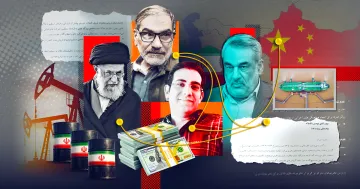
The committee’s explanatory materials explicitly identify three priorities for countering foreign influence: Russia, China, and Iran. Funds for these purposes were allocated within the same budget line item in the foreign operations bill, highlighting for legislators the unified nature of these containment efforts. Specific amounts for each area, beyond the $300 million for Russia and the $1.8 billion for the Indo-Pacific, are separated into different line items in the published text of the package.
Position of Susan Collins
Appropriations Committee Chair Susan Collins stated that the bill is intended to strengthen US national security and provide the Department of State with the resources needed to respond to emerging challenges. According to her, the document also continues the tradition of security assistance to US allies and partners—specifically Taiwan and Ukraine—and aims to counteract China's expanding influence. These statements were part of the official position of the Republican majority in the Senate regarding the budget package.
Context: The Ukraine Funding Question
Discussion of the package occurs against the backdrop of a fact previously revealed in the Senate: the US administration's 2027 budget request did not include funding for the USAI program for Ukraine. This program allows the Pentagon to contract weapons and equipment for the Ukrainian army from American manufacturers. Thus, the bill’s stated “continued assistance to Ukraine” and the absence of a separate USAI line in the administration's request create a contradiction that will likely be the subject of further committee deliberations.
Status of the Document
At this stage, the released texts remain drafts: the Appropriations Committee has merely introduced them for consideration. The final decision on the allocation of funds must be made by the full Senate, followed by the House of Representatives and the President. Until all procedures are completed, neither the $300 million for countering Russia, nor the $1.8 billion for the Indo-Pacific, nor the $3.3 billion for Israel are considered approved budget expenditures.