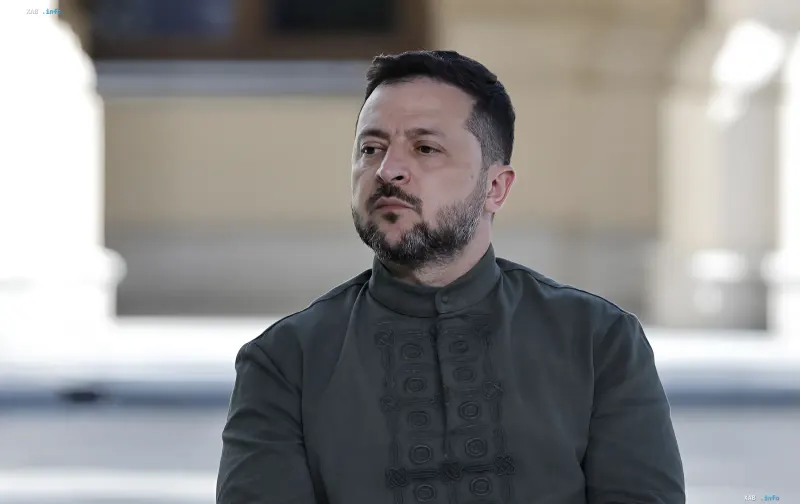
Republican senators in the US have proposed that Ukrainian President Volodymyr Zelenskyy exchange a 100-day halt on strikes against Russian energy facilities for an expansion of the Starlink satellite system's range by approximately 300 kilometers deep into Russian territory. This is reported by RBC-Ukraine citing The Wall Street Journal, with details of the initiative confirmed by Gordonua, The Moscow Times, and Dialog. According to the publication's sources, the proposal was made during a visit by Senators Roger Wicker and Kevin Cramer to Kyiv as part of a bipartisan US congressional delegation.
The Essence of the Proposal: Communications in Exchange for a Pause in Strikes
According to the WSJ text, expanding Starlink's operation 300 km deep into Russia would allow the Ukrainian military to more effectively target Russian missile and drone launchers, which Russia regularly uses to attack Ukrainian cities. The publication's sources claim that Zelenskyy expressed readiness to strike such a deal and agreed to halt strikes on Russian energy facilities for 100 days. As The Moscow Times notes, such a step could become the first move toward reviving a stalled peace process, while the proposal itself came against the backdrop of mounting pressure from Washington on Kyiv demanding an end to strikes on Russian oil refineries.
Context: Recent Starlink Restrictions in Ukraine
The senators' initiative comes as Ukraine's Defense Forces have recently faced restrictions on Starlink operations: Ukrainian military personnel were unable to use drones at speeds exceeding 160 km/h. According to media reports, the order to restrict the satellite system used for battlefield communications and drone control came from the White House. According to RBC-Ukraine, on October 15, the situation regarding restrictions on Starshield — the military package of Starlink — in Ukraine improved, although restrictions remain in place.
Kyiv's Position and Alternative Exchange Options
Publicly, Zelenskyy has stated that he is also prepared to suspend attacks on oil refineries in exchange for additional interceptors for Patriot air defense systems from the US. Thus, two different exchange options remain on the table: a pause in strikes in exchange for Starlink expansion (the senators' proposal) or in exchange for additional air defense assets. The publication notes that the ability to destroy the launchers themselves, rather than just shooting down the missiles launched from them, appears to be a more effective option for Kyiv, which explains its interest in expanding the satellite communications coverage area.
Reaction in Congress and Germany's Role
Against the backdrop of Starlink restrictions, US Senator Thom Tillis urged the US authorities to launch an investigation into the Pentagon's activities. Germany is exerting a separate factor of pressure on Washington: Berlin is paying for the Starshield military package for the Ukrainian military, and the contract runs until April 2027. Germany is demanding that the US lift the Starlink restrictions in Ukraine, which heightens the domestic political resonance surrounding the satellite system and makes the Republican senators' proposal a notable element of negotiation dynamics between Kyiv and Washington.