Washington, August 15, 2026. — The administration of President Donald Trump has initiated an unprecedented audit of NATO allies. On the eve of concluding a major review of the US military presence in Europe, the Pentagon has sent a special questionnaire to the capitals of alliance countries. The document aims to assess not only the military but also the ideological loyalty of partners to the current policy of the White House.
The Questionnaire as a Tool for Assessing Allies
According to documents reviewed by the agency, the questionnaire contains a series of sharp questions aimed at identifying the real level of support for Washington. Allied countries must report whether they have expressed "public support" for US foreign policy and what "restrictions" they impose on the use of their bases by US troops. Special attention is paid to the economic aspect: Washington is checking whether countries are allocating funds for purchases from US defense contractors and whether they are willing to repeal regulations that hinder contracts with American companies.
A key evaluation criterion has become the compatibility of countries with the US approach, which Defense Secretary Pete Hegseth formulated in May of this year as the principle of "strong, clear, quiet." This review, launched in the summer of 2026, is set to conclude in December and will determine how many and what types of troops will remain in Europe.
Political Trade: From Germany to Poland
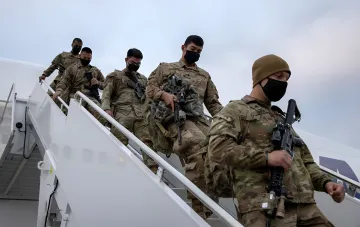
Washington has already demonstrated a direct link between the political preferences of allies and the level of military support. A striking example was the decision to withdraw 5,000 troops from Germany and refuse to station Tomahawk cruise missiles. Officially, this was explained by concerns about escalation from Russia, however, analysts link this to Washington's support for far-right forces in Berlin.
At the same time, the US has promised to send additional troops to Poland, citing the election of nationalist Karol Nawrocki as the country's president. This approach confirms the thesis that security in Europe now directly depends on the ideological proximity of governments to the course of Donald Trump.
Sanctions for "Betrayal": The Example of Spain and Iran
Particular dissatisfaction from the Trump administration was caused by NATO countries' refusal to support a military operation against Iran. The US President was extremely dissatisfied with the position of allies, especially harshly criticizing Spain. Trump stated that the United States no longer wants to trade with Madrid, calling it a "terrible partner".
According to Reuters, the Pentagon has prepared several sanction scenarios against those alliance member countries that refused to support the military operation. The document reflects deep "disappointment" on the American side regarding the position of some allies, who, in Washington's view, let the US down at a critical moment.
Contradictory Data
While the official position of the Pentagon boils down to the need to "optimize" spending and increase the efficiency of the alliance, experts note inconsistencies in the argumentation. On the one hand, Washington declares the need to comply with the principle of "strong, clear, quiet" and reduce military presence for efficiency. On the other hand, decisions to withdraw troops from some countries (Germany) and redeploy them to others (Poland) are based on internal political processes in these states, rather than purely military considerations. This creates a situation where alliance security is replaced by political demands for "loyalty" to a specific leader, which contradicts the traditional principles of NATO collective security.