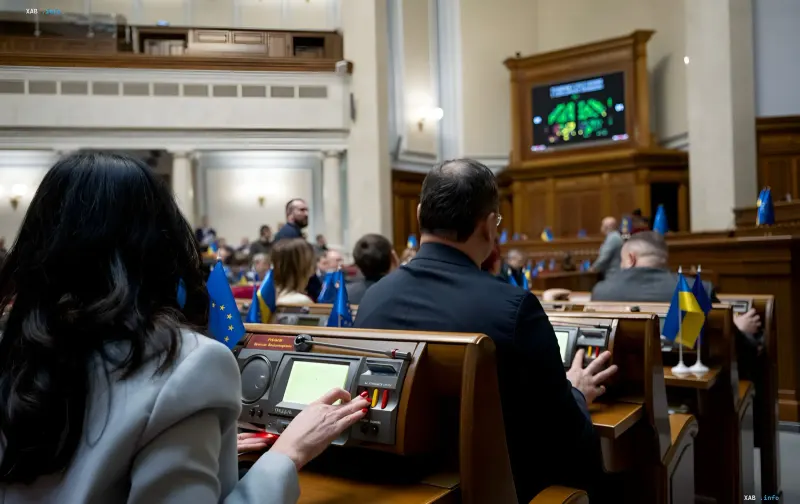
The Verkhovna Rada of Ukraine has approved a decision for the country to join the Steering Committee of the Special Tribunal for the Crime of Aggression against Ukraine. The resolution received 293 votes from people's deputies. This is reported by RBC-Ukraine with reference to the draft law on Ukraine's accession to the Enlarged Partial Agreement on the Steering Committee of the Special Tribunal for the Crime of Aggression against Ukraine, registered under number 0399 on October 30, 2026.
Status as a Steering Committee Member
The adopted document entails that Ukraine will obtain the status of a member of the Special Tribunal's Steering Committee. This signifies the country's transition from an observer and participant to one of the bodies directly shaping the institutional architecture of the future court. In essence, Kyiv secures a voting right in the highest governing body of the mechanism intended to prosecute the crime of aggression.
Practical Implications
Membership in the Steering Committee will allow Ukrainian representatives to participate in defining the special tribunal's policies, approving its budget, and addressing administrative issues. Thus, the country will take part in making key decisions regarding the organization and work of the Special Tribunal, rather than just acting as the party whose interests it defends. This expands Kyiv's influence on the procedural and financial parameters of the future court's operations.
Context of the Tribunal's Creation
The process of creating a Special Tribunal regarding Russia's crime of aggression against Ukraine moved to a practical stage in June 2025. At that time, President Volodymyr Zelenskyy and Council of Europe Secretary General Alain Berset signed an agreement for its establishment. The signing of the document laid the legal foundation for forming an institution that previously existed mainly at the level of political agreements.
EU Funding
In January 2026, the European Union allocated the first 10 million euros for funding the future special tribunal. This decision was an important step for the institution's launch, as concerns had previously arisen regarding a lack of funds for its creation and subsequent operations. The allocation of the starting tranche, coupled with Ukraine's accession to the Steering Committee, indicates that the institutional and financial preparation of the tribunal is moving forward in parallel.
These steps collectively—from the 2025 agreement, through the EU funding in early 2026, to the Rada's passage of the law on Steering Committee membership—demonstrate the phased implementation of a mechanism to hold the crime of aggression accountable. For Ukraine, the key outcome of the vote is not merely a formal accession, but real participation in managing the court that is set to examine actions classified as aggression against the state.