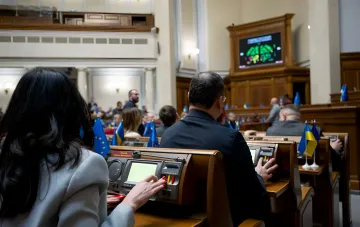
On November 24, 2026, the Verkhovna Rada adopted resolution No. 16207, which recommended that the government review operating conditions for enterprises during a 'yellow' air threat level. The document suggests that businesses could continue operations even without an equipped shelter or safe space, provided there is voluntary written individual consent from each employee. However, lawyers emphasize that the resolution is purely recommendatory and does not automatically cancel the requirements of the September Cabinet of Ministers resolution No. 1092, for which the formal deadline expires on December 4, 2026.
What the Parliamentary Initiative Proposes
According to Olga Zavyazun, a lawyer specializing in business support at Juscutum, the initiative proposes a fundamentally different work model. If the recommendation is implemented at the government level, an enterprise could function without a shelter, provided every employee voluntarily confirms their consent to such work in writing. As the specialist specifies, giving consent does not mean the employee waives their right to safety: employees can stop work and move to a shelter at any time if they deem it necessary. The employer remains responsible for notifying staff and visitors about alerts, conducting briefings, and ensuring occupational safety compliance.
Why the Situation Has Not Yet Changed Legally
A key point Zavyazun highlights is that the amendments to the government's resolution No. 1092 remain just a draft and have not yet entered into force. 'Formally, the current version of the resolution remains in effect, and the transition period for businesses without a shelter or a properly equipped safe space ends on December 4, 2026,' the lawyer explains. Thus, until the updated document is officially adopted by the Cabinet, enterprises must follow current requirements: either have their own shelter or ensure access to a safe space.
Selective Deferral: Who Can Operate and Until When
Parallel to the parliamentary initiative, the Ministry of Economy has prepared its own draft amendments to resolution No. 1092. According to MP Yaroslav Zheleznyak, the document provides for a selective deferral: companies that document the start of shelter arrangements by December 4 will be allowed to operate until April 4, 2027, and those building a shelter according to a project will be allowed until June 4, 2027. There is no automatic deadline extension for all enterprises. Furthermore, on November 19, Minister of Economy and Environment Oleksandr Kravchenko announced that the updated resolution would be finalized in the coming days; the document is expected to extend the transition period and allow small businesses to use neighboring shelters within a 200–300 meter radius.
What Documents to Prepare Now
The lawyer emphasizes that the government has not yet approved an official list of supporting documents. However, according to the published description of the project, confirmation of the commencement of work may include a package of decisions on starting arrangement measures, project documentation, contractor agreements, payment documents, certificates of work performed, or documents confirming access to a neighboring shelter. Zavyazun advises enterprises to operate based on the current December 4 deadline while simultaneously tracking Cabinet decisions regarding both scenarios — the parliamentary recommendation and the government's draft with the selective deferral.
Practical Context: Shelters in Urban Environments
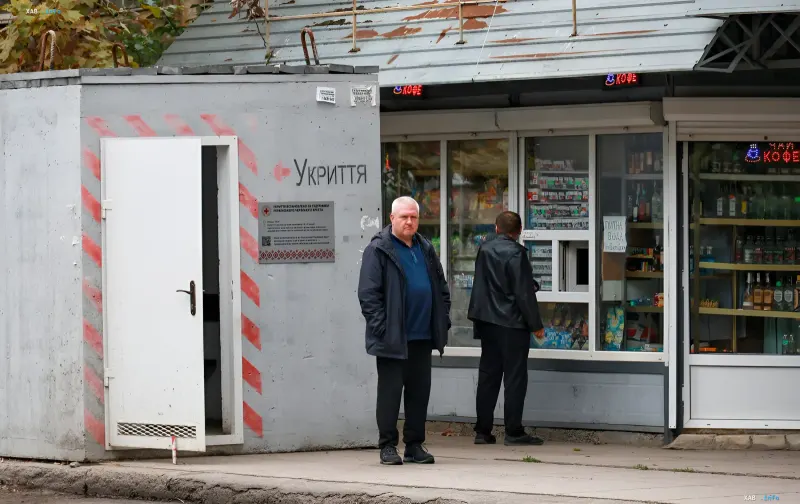
Against the backdrop of the discussion on the regulatory framework, work on equipping protective structures continues in Ukrainian cities. Photographs from open sources show both finished shelters marked with 'UKRYTTYA' signs and usage instructions, as well as temporary structures attached to commercial facilities such as shops, cafes, and food service outlets. Small and medium-sized businesses, whose premises are often not designed for full-fledged shelters, are in the most vulnerable position: for them, the decision on access to neighboring shelters within a 200–300 meter radius, which, according to Minister Kravchenko, should be included in the final version of the resolution, is critical.