In autumn, the Guelder rose or European cranberrybush (Viburnum opulus) becomes covered in scarlet berries that can remain on the branches even during winter chills. The fruits gradually change color, turning a deep red, while the leaves acquire distinctive autumn shades. The berries can be left on the bush—according to Royal Horticultural Society (RHS) recommendations, they serve as an important food source for birds in the cold season—or harvested for home preserves. However, improper harvesting and excessive pruning can damage the bush and directly affect the number of flowers and fruits next year. We explain how to do it right.
When to Harvest Viburnum in Autumn
The berries are usually harvested in September and October, although the exact timing depends on the variety, weather conditions, and the purpose of the harvest. Some experts and gardeners lean toward later dates—late October or early November—when the fruits are fully ripe. Ripeness is indicated by several signs: the characteristic red color of the berries, whole fruits without mold, rot, or significant damage, and a dry day for harvesting so that rainwater does not remain on the berries. It is important not to rely solely on the calendar: if autumn is warm, the ripening schedule may differ from usual.
Frosts, Bitterness, and Astringency of Berries
There is a well-established tradition of harvesting viburnum after the first light frosts. It is believed that under the influence of low temperatures, the characteristic bitterness and astringency of the fruits become less pronounced, making the berries better suited for juices, jams, and other winter preserves. At the same time, waiting for frosts is not strictly necessary: if the fruits are already ripe, they can be harvested earlier. To soften the tart taste, berries are sometimes pre-frozen, although the result depends on the ripeness and properties of the fruits themselves. Do not leave the entire harvest on the bush just for the sake of frosts if the berries have begun to spoil.
How to Properly Cut Clusters
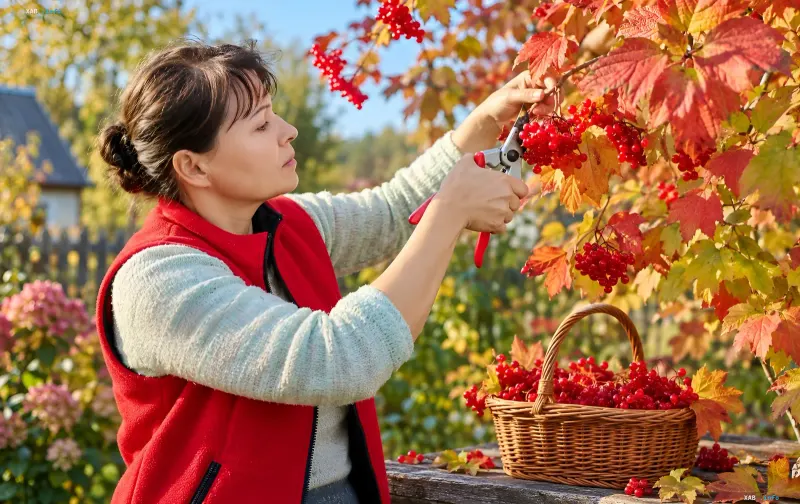
Viburnum must be harvested carefully: rough breaking of branches can damage the shoots. It is most convenient to use garden scissors or a small pruner and cut the clusters at the stem without snapping them off along with a piece of a larger branch. The harvest is placed in shallow containers so that the lower fruits are not crushed, and after harvesting, it should not be left in a warm room for long. If the bush is large, do not try to reach all clusters at any cost—some fruits can be left on the upper branches.
Why Autumn Is Not the Time for Heavy Pruning
Autumn is not the best time for heavy pruning of viburnum, although damaged shoots do not necessarily have to be left until spring. The main mistake is trying to give the bush an "ideal shape" in autumn by heavily shortening the branches. Many spring-flowering shrubs, including viburnum, form flower buds on the previous season's growth, so untimely pruning can lead to the removal of buds that were supposed to produce flowers. Viburnum opulus generally does not require regular heavy pruning, and rejuvenating an overgrown bush is best done in another period suitable for this procedure.
Which Branches Can and Should Be Removed
First of all, you should inspect the bush and determine if there are branches that require removal. As specialists from Penn State University explain, when caring for ornamental shrubs, dead, damaged, and problematic branches are removed first, without cutting healthy shoots just because they seem too long. These branches include completely dead dry shoots, broken by the wind or snapped under the weight of fruits, as well as diseased branches with obvious signs of damage—clean tools should be used when removing them, and cut parts should not be left under the plant.
Pruning After Flowering and Harvest Storage
The timing of pruning depends on what viburnum is grown for: beautiful flowering, decorative shape, or fruits. For spring-flowering shrubs, pruning is often recommended after flowering is complete, but there is a catch: it can prevent berry formation. If the main goal is an autumn harvest, intervention should be limited and shoots on which fruits will form should not be cut unnecessarily. If viburnum grows primarily as an ornamental shrub, light shaping pruning is acceptable after flowering. The harvested berries are washed and stored frozen, mashed with sugar, or preserved using other methods to retain vitamins until winter.