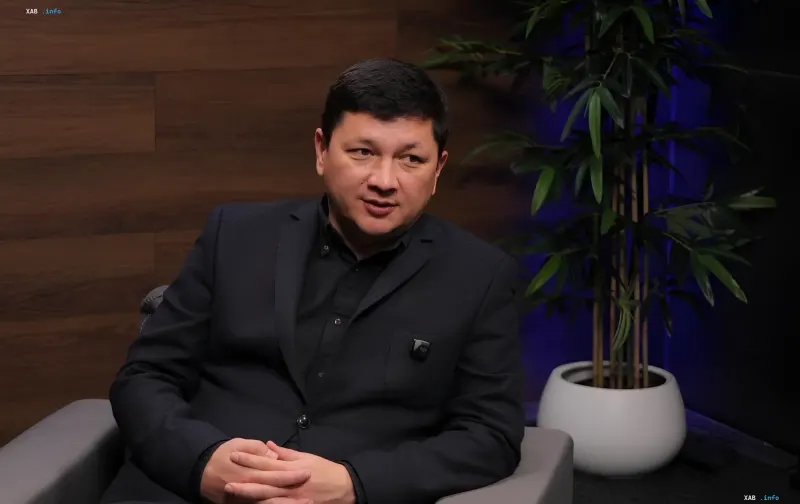
Minister for Veterans Affairs Vitaliy Kim, in an interview with Armiya FM published by RBC-Ukraine, summarized his first one hundred days in office. During this period, according to him, the Ministry formed a management team, identified 60 critical processes—each with assigned responsibilities and deadlines—and secured a 3 billion UAH increase in funding for veterans' policy in next year's budget. Kim emphasized that the main goal of their work is not the number of presentations and forums, but the concrete services and successful cases that veterans receive.
Team, 60 priorities, and a plan for the year
According to the minister, during the first months of operation, the agency strengthened its management team, including the appointment of a deputy minister responsible for psychological support. After analyzing the issues, 60 critical processes were identified, with responsible persons and deadlines set for each. A work plan has been developed for the next six months and for the entire following year. Among the practical results of the first hundred days, Kim noted the launch of educational programs for veterans and the securing of additional budget allocations.
Funding: from 300 to 800 million UAH for entrepreneurship
The specific figures for budget changes voiced by the minister are as follows: funding for veterans' entrepreneurship support is planned to be increased from 300 to 800 million UAH, and an additional 1.2 billion UAH will be allocated for housing payments for veterans. The total increase in funding for veterans' policy in next year's budget is 3 billion UAH. Kim emphasizes that these funds are aimed at creating a sustainable support infrastructure, not one-time measures.
Inter-agency cooperation: "A veteran should not be a courier"
One of the key areas of work, according to the minister, has been establishing inter-agency cooperation. Every ministry in Ukraine now has a deputy personally responsible for veterans' policy. Work is underway to merge registries and create a unified database so that a veteran is not forced to coordinate the work of various state institutions on their own. "It shouldn't be the case that a veteran is a courier between ministries. These should be state problems that the state solves itself," Kim stated. The Ministry is also working on creating a single entry point into the veterans' services system and introducing quality control standards so that the level of support does not depend on a person's place of residence.
Apologies for controversial remarks
In the interview, the minister specifically addressed previous statements regarding potential difficulties in post-war veteran adaptation, which had caused a negative reaction within parts of the veteran community. Kim publicly apologized to everyone his words might have hurt and admitted that he made mistakes in his wording. "First and foremost, I want to apologize to everyone I hurt. I know there are such people. In the future, I will try to stick to a more official communication format," he said. At the same time, the minister explained that he wanted to draw society's attention to the challenges that will arise when a large number of military personnel return to civilian life, and emphasized that the state should prepare for them in advance rather than reacting after the fact.
Psychological recovery and employment
Among the priorities for the near future, Kim mentioned the development of psychological support. The minister points to a shortage of specialized military psychologists who should work with veterans, those returned from captivity, and the families of the missing and deceased. Psychological assistance, according to him, should not be limited to one-time consultations. The State Veteran Support Service, which currently employs about 3,000 specialists, is also in the development stage: there are plans to introduce unified work standards and focus on small and frontline communities where veterans' infrastructure is underdeveloped. Kim also emphasizes that veterans are not a passive part of society, but an active resource for the country's recovery, whose management experience and ability to make difficult decisions can become the foundation for the state's renewal.