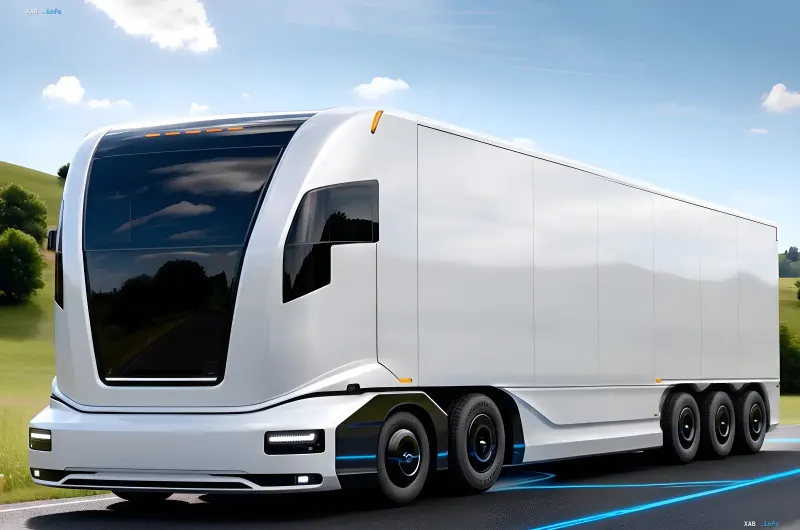
A Revolution in Logistics: A Truck Without a Traditional Cab
British company Voltempo has unveiled a new autonomous truck project that, according to experts, is capable of transforming the entire logistics industry. The key feature of the prototype is the complete absence of a traditional driver's cab. As reported by Autocar, it is precisely this design decision that allows the volume of cargo to be significantly increased and the overall mass of the vehicle to be reduced, directly affecting the economic efficiency of freight transport.
Parameters That Exceed Current Limits
Today, strict regulations apply to rigid trucks (without a trailer) in the United Kingdom: a maximum length of 12 metres, a gross mass of 32 tonnes, and four axles. The Voltempo prototype substantially exceeds these limits: its length is 15.6 metres, its gross mass is 42 tonnes, and it has five axles. In terms of length, this vehicle is comparable to a large bus, which underscores the scale of the new approach to designing freight vehicles.
Increased Payload and Logistics Efficiency
According to specialists' calculations, ordinary trucks carry an average of about 16 tonnes of cargo. Thanks to the new cabless design, this figure can be raised to 18.6 tonnes. Importantly, the vehicle is 1.5 metres shorter than articulated (semi-trailer) trucks, yet the rigid monolithic body and reduced tare weight compensate for the difference in length and improve the overall efficiency of logistics processes, reducing the number of trips per tonne of goods delivered.
Legal Framework and Series Production Timeline
The British Automated Vehicles Act is of fundamental importance to the project, as it permitted driverless vehicles to travel on public roads. This makes it possible to conduct testing not only on closed test sites but also directly on motorways. Series production is planned to launch at the end of 2027, with the first deliveries to customers to take place in mid-2028.
Support from the European Industry and Expansion Plans
According to Michael Boxwell, all leading truck manufacturers in Europe have approved this prototype as an official vehicle category, which is an important signal for the standardisation of the industry. The first vehicles will be assembled directly in the United Kingdom and supplied to local carriers, while at a later stage the project will expand to the entire European market, potentially setting new standards for autonomous freight transport.