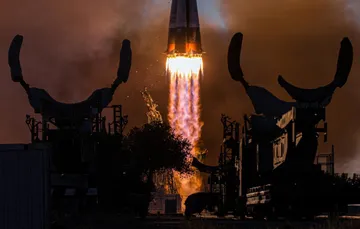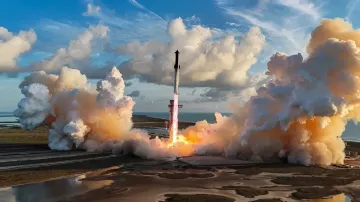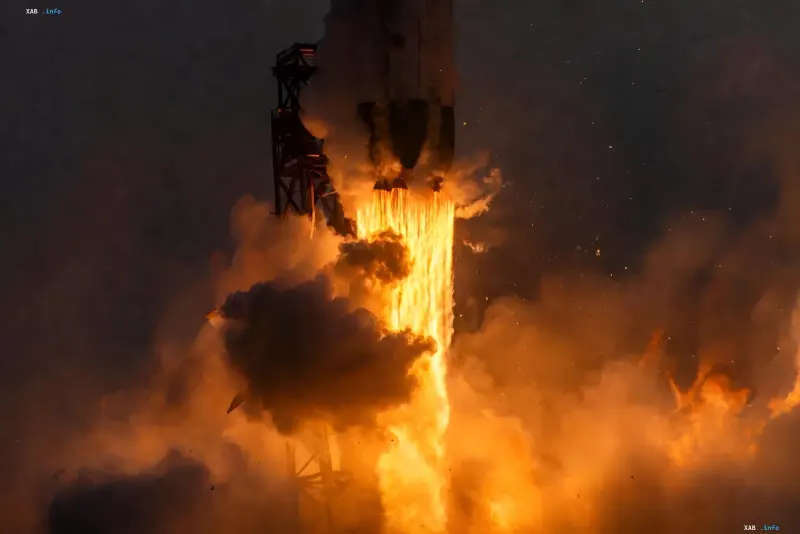
The Russian Ministry of Finance has prepared amendments to the budget package, providing for the allocation of over 10 billion rubles from the federal budget for the construction of Vostochny Cosmodrome infrastructure in 2027–2029. Relevant data is contained in the department’s materials, as reported by TASS. The funding is aimed at creating launch and auxiliary complexes that will allow the Vostochny spaceport to carry out launches of several next-generation promising launch vehicles.
Three Launch Vehicles — Three Orbital Niches
According to the published materials, new infrastructure facilities will be designed to service three fundamentally different launch vehicles. The first is Soyuz-5, a medium-class two-stage rocket, which is intended to become the foundation of the Russian orbital transport system for the coming decades. The second is Start-1M, a light conversion rocket focused on the small satellite launch market. The third is Amur-LNG, a reusable medium-class carrier whose key bet is on reducing the cost of putting payloads into space through the reuse of the first stage. Thus, Vostochny will have the capacity to cover three segments of orbital services at once — from ultra-light to medium-class launches.
Soyuz-5: The First Flight Has Already Taken Place
The Soyuz-5 rocket is a two-stage carrier approximately 64 meters tall with a launch mass of about 532 tons. The first stage is equipped with an RD-171MV liquid-propellant engine, and the second with an RD-0124MS; naphthyl and liquid oxygen are used as fuel. According to the stated characteristics, the vehicle is capable of delivering up to 17 tons of payload to low Earth orbit and up to 2.5 tons to geostationary orbit. The first test launch of Soyuz-5 took place on April 30, 2026, from the Baikonur Cosmodrome, which confirmed the operability of the rocket’s key systems and paved the way for serial launches from Vostochny.
Start-1M and Amur-LNG: Conversion and Reusability
Start-1M is being created based on technologies from the Topol-M intercontinental ballistic missile and is primarily intended for launching small satellites weighing up to 500 kg into low Earth orbit. The conversion approach allows for the use of proven ICBM elements in civilian space applications, reducing development time and costs. Amur-LNG, in turn, is being developed by the Progress Rocket Space Centre as a medium-class two-stage rocket using liquefied natural gas and liquid oxygen. The main feature of the project is a recoverable first stage designed for multiple use. In the reusable configuration, the carrier will be able to deliver at least 9.5 tons of cargo to an orbit of 200 km, which, according to the developer, will significantly reduce the cost of a single launch.
The Strategic Meaning of Investment
Allocating over 10 billion rubles for Vostochny's infrastructure in 2027–2029 underscores the state's focus on diversifying launch capabilities and reducing dependence on a single cosmodrome. Creating a single site capable of servicing carriers of different classes and with varying degrees of reusability forms the basis for a competitive national market for orbital services. For the industry, this means not only technological renewal but also an economic effect: the reusable Amur-LNG and the light Start-1M are aimed at making access to space cheaper for commercial and state customers.