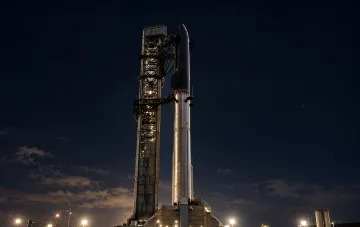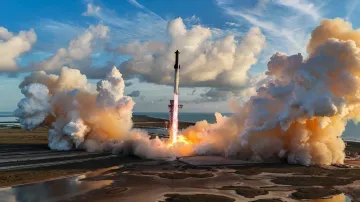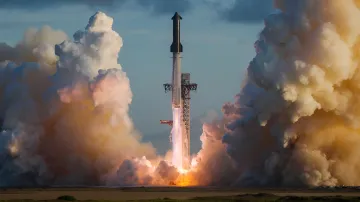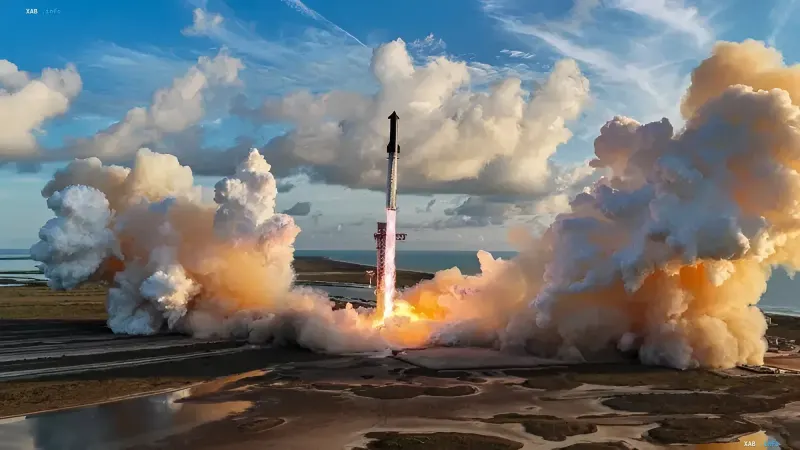
SpaceX is preparing for the 15th test flight of its Starship super-heavy rocket, scheduled to launch on Friday, November 13, 2026. Designated internally as Flight 15, the mission will mark the first time in history that both stages of the system—the Super Heavy booster and the Starship spacecraft—are set to return to the Starbase launch site in South Texas and be caught by the launch tower's mechanical arms. Elon Musk announced this on October 20 during the company's quarterly earnings report, with mission details subsequently revealed in the official flight description.
The "Catch" Mechanism: How the Tower Secures Multi-Ton Stages
In SpaceX terminology, a "catch" refers to a unique booster recovery mechanism: each stage independently flies back to the launch complex, where special mechanical arms on the launch tower—affectionately nicknamed "chopsticks"—catch it mid-air. To date, SpaceX has successfully caught the Super Heavy booster three times, but a similar maneuver has never been attempted with the Starship spacecraft itself. This is a fundamentally more complex task: the ship climbs higher and travels further than the booster, meaning its return involves harsher aerodynamic loads and requires much more precise energy management during the final phase.
Flight Timeline: From Liftoff to 22 Hours in Space
The launch window is 75 minutes long, opening at 5:45 PM US Eastern Time (22:45 UTC). If everything goes according to plan, the Super Heavy booster will return to the Starbase spaceport approximately six and a half minutes after liftoff. The Starship spacecraft will remain in flight significantly longer, planning to enter a low Earth orbit at an altitude of about 275 km, after which the vehicle will complete roughly 14 orbits around the planet. The total flight duration will exceed 22 hours. During the mission, Starship will deploy 26 next-generation Starlink satellites (V3 version), which will be the first spacecraft of a future mega-constellation eventually projected to number around 100,000 satellites.
Fallback Scenarios and Acceptable Risks
Despite the ambitious goal, SpaceX emphasizes that the mission profile is designed with potential complications in mind. "As with the first orbital flight, the program is structured so that at any moment it can transition to a safe suborbital trajectory or perform a nominal deorbit maneuver over one of the pre-determined ocean zones," the company explained. Thus, even if the ship catch attempt fails, the mission will not be considered a failure: the vehicle will be able to safely complete its flight according to the standard nominal scenario.
Significance of the Mission for the Industry
The successful return of both stages to the launch pad will mark the first complete recovery of all components of an orbital rocket system in the history of astronautics. For SpaceX, this is a key step toward creating a reliable, rapidly reusable rocket capable of launching with minimal turnaround time between missions. The previous 14th flight, conducted on September 28, ended with the ship reaching orbit and deploying 26 Starlink satellites, but neither stage was returned to the pad. If everything goes according to plan on November 13, SpaceX will make space exploration history by achieving a technological breakthrough that no space agency or private company in the world has yet managed.