On the night of August 13, 2026, the Armed Forces of Ukraine carried out a large-scale operation to strike critical military objects of the Russian Federation. According to data from the General Staff of the Armed Forces of Ukraine, published in official channels, strikes were delivered both on the territory of Russia itself and on temporarily occupied territories. The main target of the operation was the Russian 'Nebo-U' radar station (Radar) in Sevastopol, the destruction of which deals a significant blow to the enemy's air defense system.
Strike on the 'Nebo-U' Radar: Blindness in the Airspace
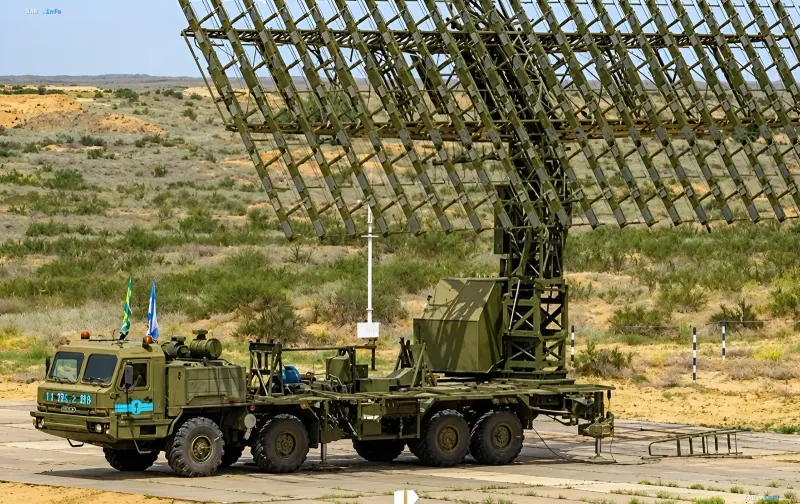
The central event of the night operation was the strike on the 'Nebo-U' radar station in Sevastopol. This station is a long-range three-coordinate radar system operating in the meter band. Its main purpose is the detection and tracking of air targets at high altitudes and long ranges. The system is capable of tracking not only combat aircraft but also cruise and ballistic missiles.
Experts note that 'Nebo-U' plays the role of 'eyes' for the air defense system, providing target designation for surface-to-air missile systems. The destruction or disabling of this station significantly reduces the ability of Russian troops to control the airspace over Crimea and the Black Sea. This creates favorable conditions for further actions by Ukrainian drones and aviation, depriving the enemy of timely warning about approaching threats.
Series of Strikes on Logistics and Command
In addition to the strike on the radar, Ukrainian military forces struck a number of objects ensuring the viability and combat readiness of Russian groupings. In the area of the city of Myrne in the occupied part of the Zaporizhzhia region, a control point for unmanned aerial vehicles (UAVs) was destroyed. This dealt a blow to the coordination of Russian drone operations, making their use in the combat zone more difficult.
Furthermore, critical logistics hubs were hit: a fuel and lubricants (F&L) warehouse near the city of Dovzhansk in the Luhansk region and an ammunition depot in the area of Novy Yary in the Zaporizhzhia region. The destruction of F&L warehouses paralyzes the mobility of Russian equipment, while the loss of ammunition directly affects the intensity of artillery shelling.
Strikes on Russian Territory and Kherson
The operation was not limited to occupied territories. The Armed Forces of Ukraine struck a concentration of Russian military personnel in the area of the settlement of Butyrki in the Belgorod region of the Russian Federation. This confirms the ability of the Armed Forces of Ukraine to deliver pinpoint strikes on the enemy's rear at a significant distance from the front line.
A material and technical support warehouse near the city of Kalanchak in the Kherson region was also struck. The General Staff of the Armed Forces of Ukraine stated that work on key enemy objects continues, indicating the systematic nature of the campaign to destroy invasion infrastructure.
Context: Series of Strikes on Crimea
The night events of August 13 were a continuation of the active phase of counter-offensive operations in Crimea. A reminder of the dynamics of events is the data from the previous night: on August 12, Ukrainian forces delivered a series of strikes on military objects in Crimea. In particular, the control tower of the 'Saki' airfield was struck in the area of Novofedorivka, and a control repeater for strike drones was destroyed near the city of Chornomorske. This testifies to a targeted strategy to dismantle the military infrastructure of the peninsula.