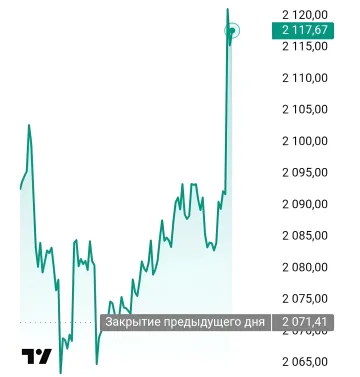
Shares of Russian state-owned bank VTB hit a historic low on Wednesday, August 26, 2026, dropping below their par value of 50 rubles — to 49.86 rubles per share. This is the first time in the history of the bank's public trading that its share price has fallen below par. According to RBC-Ukraine, citing The Moscow Times, the shares lost 3% in a single day, 11% since the start of August, and 45% since the beginning of 2026. Compared with its 2015 peak, VTB has lost 88% of its market capitalization, amounting to 4.7 trillion rubles.
Financial ties to the affected marketplaces
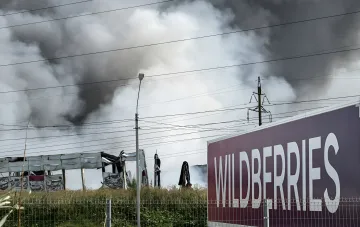
The main trigger of the collapse was Ukrainian drone strikes on the logistics infrastructure of Russia's two largest marketplaces — Wildberries and Ozon — with which VTB is linked by financial obligations. In late May 2026, the bank announced a strategic partnership with Wildberries, but within months the company became a target of attacks by the Ukrainian Armed Forces, losing a third of its warehouse capacity and suffering direct losses of several hundred billion rubles. In addition, VTB holds a stake in Ozon as collateral for a loan issued to AFK Sistema — a major shareholder in the marketplace. Ozon's own shares have plunged 45% since the start of summer, creating a risk for the bank that it may need to expand the credit line for the affected company.
Systemic deterioration in asset quality
Analysts at IFK Solid Investments point out that VTB's problem is systemic and is not limited to its ties with the marketplaces. As early as last year, the bank faced a sharp rise in loan defaults: the share of problem assets on its balance sheet increased 1.5-fold — to 14.2%, which is a third higher than the average across the Russian banking system. For the first half of 2026, VTB's profit fell by 20% — to 225.2 billion rubles, and the decline accelerated to 34% in the second quarter. Under IFRS reporting, the bank had to increase reserves for problem loans by almost a third — to 66.5 billion rubles for the quarter. The free capital buffer shrank to 10.7%, against a permissible regulatory threshold of 10%, bringing the bank close to a critical level.
Staff cuts and market capitalization
In late July 2026, Deputy Chairman of VTB's Management Board Dmitry Pyanov announced large-scale staff reductions: the bank intends to fire 10% of head-office employees to cut operating costs. Against this backdrop, the bank's current market capitalization stands at just 646 billion rubles (about $7.7 billion), against 35 trillion rubles of assets and 8.5 trillion rubles of retail customer funds on deposit. For perspective: VTB's exchange value is three times smaller than the market capitalization of the Labubu toy maker.
Timeline of strikes and market reaction
On the night of August 24, 2026, the Ukrainian Armed Forces attacked three major Ozon logistics hubs on Russian territory. After news of the strikes was published, the marketplace's shares plunged sharply — by almost 30%. A day before the attacks, it became known that Ozon had removed the addresses of its Russian warehouses from a public directory — this happened at least 20 days before the first strikes, while the addresses of the company's overseas logistics centers remained freely accessible. It was precisely this sequence of events — the concealment of addresses, followed by targeted strikes on the identified facilities — that dealt the final blow to the share prices of both Ozon itself and the linked VTB.
Contradictory data
In the provided sources, information on the scale of Wildberries' losses is phrased as "several hundred billion rubles" in direct losses, however the exact figure is not disclosed by any of the sources, and an independent audit of these data is unavailable at the time of publication. Moreover, different materials cite different dynamics for the fall in Ozon's shares: in one context a 45% plunge "since the start of summer" is mentioned, while in another a sharp drop of almost 30% is noted immediately after the August 24 strikes. Both figures may be correct for different time snapshots, however this is not commented on in the original sources, which creates uncertainty in assessing the total damage to VTB's credit portfolio.