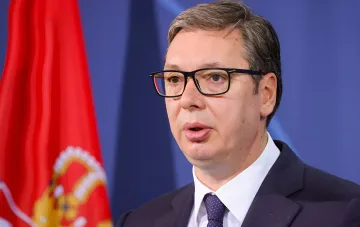
Serbian President Aleksandar Vucic confirmed that early parliamentary elections in the country will be held on October 25, 2026. The official decision to dissolve the National Assembly and schedule the vote will be signed by him on September 9 at noon. Thus, Serbia's political future for the coming months has been set: the country is preparing for a new electoral cycle against the backdrop of months of protests and internal political reshuffling.
Details of the decision: September 9 and October 25
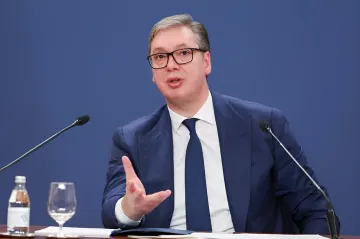
Vucic told journalists that on September 9, at noon, he will sign the decree dissolving the National Assembly and the decision to schedule early parliamentary elections. The vote, as confirmed, will take place on October 25, 2026. Earlier, the head of state had named two possible dates — October 18 or 25 — but the choice has now been made in favor of the latter. Under Serbian law, between 45 and 60 days must elapse between the announcement of elections and voting day, and the chosen date fully meets this requirement.
Context: months of protests after the Novi Sad disaster
The early elections are taking place against the backdrop of prolonged political and public protests in Serbia. Mass demonstrations began after the collapse of a canopy at the railway station in Novi Sad in November 2024, which killed 16 people. Protesters are demanding that those responsible be held accountable and that corruption be fought. People are convinced that the disaster was not merely an accident, but the result of systemic corruption in the country. The months-long protests became one of the key factors pushing the decision for an early vote.
Vucic — a candidate for prime minister: a possible fresh start
The ruling Serbian Progressive Party earlier nominated Vucic as a candidate for the post of prime minister in the event his political force wins the elections. As early as June 2026, he stated that he was considering putting forward his candidacy for this post. Thus, the upcoming vote could become a fresh start for him — already in the role of prime minister, rather than president. According to Svpressa, Vucic "addressed the Serbs for the last time as the country's president," which underscores the symbolic nature of his farewell address in his current office.
Funeral of Mladic and the region's reaction
Speaking about the sharp reaction to the state-funeral honors for Ratko Mladic, Vucic said that he "had expected all of this." "These funerals served as an alibi for many in the region to show how much they hate Serbia and how much they hate its successes," he said. It was previously reported that the EU reacted sharply to the holding of the funeral of a war criminal sentenced to life imprisonment by the Hague tribunal.