Most gardeners are used to the scheme of "plant a bulb — harvest a young head with its green tops." But the garden also has perennial onion varieties that do not form a large underground bulb, yet provide the family with fresh greens for years. One of the most unusual among them is the Egyptian walking onion (also called the multi-tiered onion) — a crop that is especially convenient to establish in late summer, while the soil is still warm and moist.
Why the Onion "Walks" Across the Plot
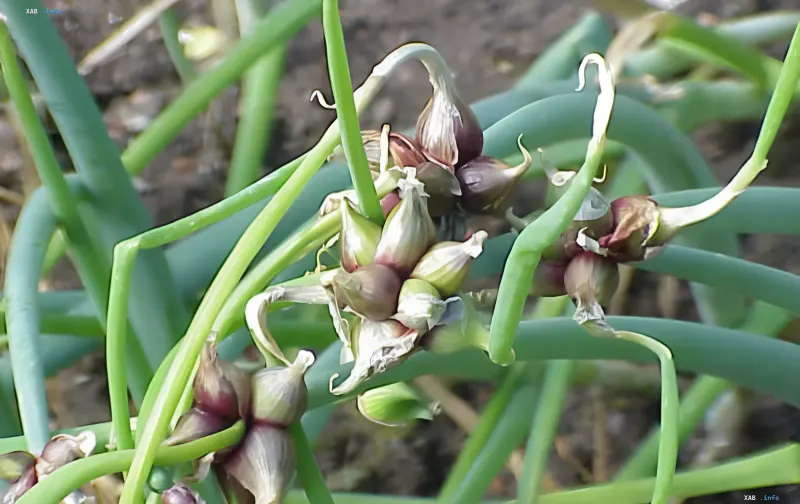
The plant got its nickname because of its unusual method of reproduction. Instead of the usual seed-bearing inflorescence at the top of the flower stalk, it forms an entire cluster of small aerial bulbils. As they ripen, they get heavier, and the stem bends down toward the ground. As soon as an aerial bulbil touches the soil, it quickly puts out roots and turns into a new independent plant. In this way, the clump gradually "walks" across the bed, expanding its area without any human intervention — you just have to get out of its way.
Late Summer — the Best Time to Establish the Bed
Right now, in late summer, it makes sense to collect the top aerial bulbils and plant them in the ground immediately. During the remaining warm period, the plants will have time to take root and prepare for winter, and already in spring you will get some of the very first green shoots on the plot. This is a clear advantage of the walking onion over many annual crops, which produce greens only after spring sowing.
Choosing a Permanent Spot
Since this is a perennial crop that will grow in one place for several seasons, it needs a permanent, well-lit sunny spot. It is important to plan the bed's location in advance so that the "walking" clump does not interfere with the annual crop rotation of other vegetables. The onion, like all its green varieties, loves stable moisture and plenty of sun; on sandy soils, where water quickly drains deep down, special attention should be paid to regular watering.
Overwintering and a Cautious First Cut
After autumn planting, it is recommended to lightly cover the bed with straw — this will help the young plants overwinter comfortably. In the first season after planting, do not cut all the green tops to the ground: the plant needs to build up mass and establish its roots well. In subsequent years, the green leaves can be used like regular green onion, but it is best to harvest them gradually and carefully, without exhausting the whole clump at once. This approach preserves the perennial's strength and allows you to get greens year after year.
Practical Takeaways for the Gardener
The walking onion is a "plant it and forget it for several years" solution: it reproduces and moves on its own, does not require annual sowing, and yields early greens. The key is to establish the bed in late summer, choose a permanent sunny spot, mulch with straw for winter, and not overload the clump with cutting in the first year. Based on materials from Styler (RBC-Ukraine).