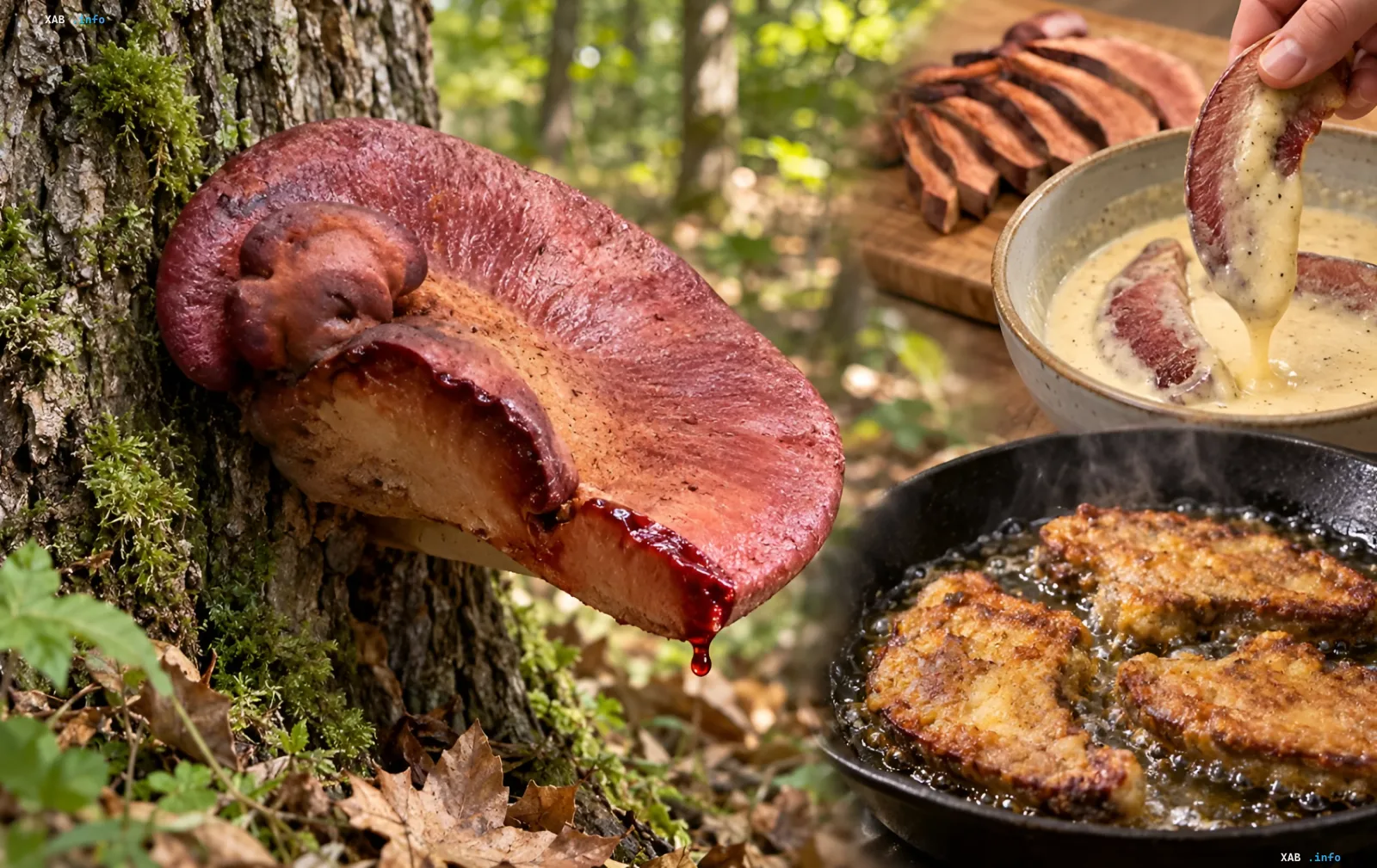
In temperate forests, one can encounter a unique wood-decay fungus that, due to its unusual appearance, attracts the attention of both foragers and culinary enthusiasts. Fistulina hepatica, commonly known as the beefsteak fungus or "mother-in-law's tongue", features a characteristic fleshy texture and reddish flesh. When damaged or cut, this fruiting body releases a liquid that visually resembles blood. This phenomenon is a natural property of the mushroom rather than a sign of spoilage or disease, often surprising beginner mushroom hunters.
Where to look and when to harvest
According to mycological guidebooks, the beefsteak fungus parasitizes or grows on hardwood trees, preferring old oaks and chestnuts. It can be found at the base of tree trunks or on fallen timber. In the region, this species appears from mid-July to mid-October in wooded areas and forest zones. Experienced foragers recommend harvesting only young specimens, as older fruiting bodies become tough, fibrous, and largely unsuitable for culinary preparation.Culinary features and cooking recipe
The flesh of the beefsteak fungus has a dense structure and a pronounced mushroom flavor with a noticeable sourness, which can be partially softened by preliminary soaking in water for one to two hours. Professional culinary recommendations also advise boiling the mushroom for fifteen minutes before main heat treatment. A popular cooking method is frying in batter: slices cut to about one centimeter thick are dipped in a mixture of beaten eggs, flour, salt, and pepper, then fried in a pan until golden brown.Health benefits and scientific research
Beyond its gastronomic value, the beefsteak fungus attracts researcher interest due to its chemical composition. Scientific publications indexed in the PubMed database document the presence of phenolic compounds and organic acids with antioxidant potential in the mushroom. Laboratory tests have confirmed the ability of its extracts to neutralize reactive oxygen species. However, experts urge not to perceive the mushroom as a medical remedy, considering it primarily as an unusual and tasty delicacy for a varied diet.
Contradictory data
Various sources present discrepancies regarding the degree of edibility and taste qualities of the beefsteak fungus depending on the harvesting region and the age of the host tree. Some guidebooks claim that the sour taste can be completely eliminated through prolonged soaking or spice addition, while practical cooks insist that the characteristic tartness is an integral and permanent feature of this species, requiring a specific approach to selecting sauces and side dishes.