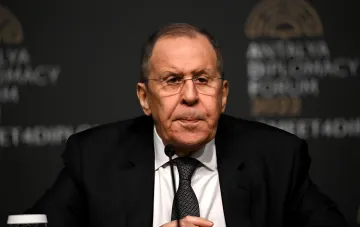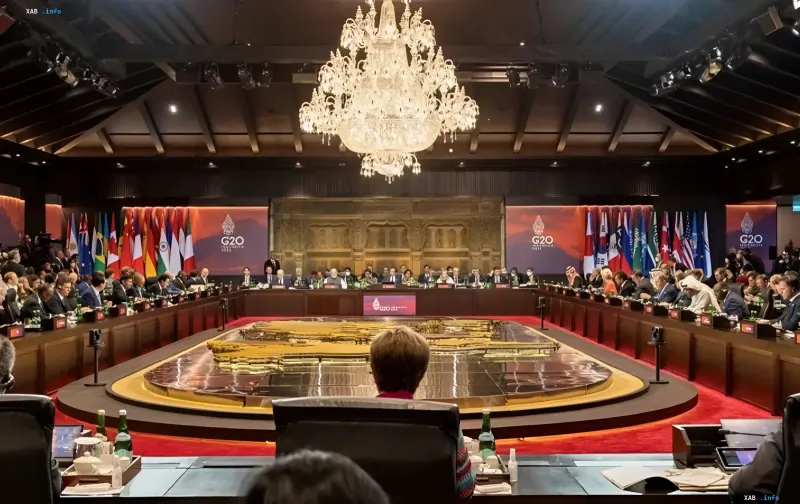
On Friday, a White House spokesperson announced that Russia will send a representative to the G20 meeting on energy sufficiency, which will take place in Houston from Monday to Wednesday, September 14–16, 2026. The specific name of the Russian official who will cross the Atlantic was not immediately disclosed by the U.S. administration, which limited itself to a general reference to the country's "representative." Nevertheless, the mere confirmation of Moscow's participation in person is already being viewed by observers as a notable signal: since February 2022, such face-to-face contacts at the G20 level have remained largely unpracticed.
Format and Composition of Participants
According to the White House, the Houston summit will focus on energy security and the adequacy of capacity. In addition to the Russian delegation, the event is expected to feature representatives of the energy sector from Europe and Asia, as well as U.S. officials who will present Washington's positions on key market issues. The meeting comes on the backdrop of the fact that last month the United States already hosted Russian Finance Minister Anton Siluanov at the G20 meeting in North Carolina (Asheville), where he held, among other things, a bilateral meeting with his American counterpart Scott Bessent.
Context: First In-Person Contacts Since 2022
As U.S. sources emphasize, Siluanov's participation in Asheville marked the first in-person presence of a Russian official of such a high rank at a G20 forum since Russia's invasion of Ukraine in 2022. The Houston energy meeting, in effect, consolidates this line of cautious resumption of face-to-face contacts. Importantly, the White House did not name in advance the surname of the future participant from Moscow, leaving room for maneuver and making it impossible to predict the level of the delegation in advance.
Energy Against the Backdrop of Peace Negotiations
The energy agenda in Houston does not exist in a vacuum: in parallel, the U.S. side is advancing President Donald Trump's 28-point peace plan for Ukraine. According to reports, the United States is examining whether Kyiv and Moscow are capable of taking measures to de-escalate the conflict over the course of the winter while simultaneously resuming negotiations on a broader peace agreement. In this context, the G20 energy meeting becomes yet another channel through which Washington maintains a line of communication with Moscow without, at the same time, easing diplomatic pressure.
U.S. Position: Cooperation Is Limited by the War
At the same time, as Reuters reported, a U.S. official on the sidelines of the G20 meeting of finance ministers and central bank heads in Asheville made clear to the Russian side that expanding economic cooperation is impossible while the war against Ukraine continues. This formulation sets the frame for the Houston talks: the energy agenda is being discussed, but it does not replace a political settlement and does not imply the automatic lifting of restrictions.
The Ukrainian Side and the "Window of Diplomacy"
Ukrainian President Volodymyr Zelenskyy, in his own words, believes that the weeks before winter offer a real window for diplomacy. At the same time, according to Kyiv's assessment, Russian leader Vladimir Putin is counting on yet another harsh winter to weaken Ukraine. Thus, the Houston G20 energy meeting falls within a sensitive time corridor, when Washington, Moscow, and Kyiv are all simultaneously assessing how far the winter period can be used for de-escalation — and how far, conversely, it may be used as an instrument of pressure.