As of August 2026, Ukraine's banking system demonstrates remarkable resilience, accumulating assets totaling 4 trillion hryvnias. Despite ongoing wartime challenges, the sector has not only maintained its position but continues to attract new players. The ownership structure of Ukrainian banks is clearly divided into three key camps: the state, foreign financial groups, and private Ukrainian owners. Understanding who owns these assets reveals the true picture of the country's economic security.
The State Sector: A Monopoly on Trust and Scale
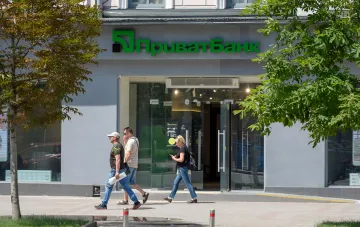
The state is the undisputed leader of the Ukrainian banking market, controlling exactly 51% of all sector assets, equivalent to 2 trillion hryvnias. The government portfolio includes 100% of the shares of PrivatBank, Oschadbank, Ukreximbank, and Sens Bank, as well as nearly 95% of Ukrgasbank shares. These five institutions form the core of the country's financial system. Three of them — PrivatBank, Oschadbank, and Ukreximbank — rank in the top three largest banks by asset size.
State-owned banks also dominate the retail segment. PrivatBank, which became state-owned following nationalization in 2016, remains the absolute leader in the number of depositors — 24 million Ukrainians keep their savings in this bank. Oschadbank takes second place with 12 million clients. Collectively, state banks accumulate about 47% of all foreign currency deposits from the population, totaling 282 billion hryvnias, making them the main guarantor of citizens' funds safety amidst instability.
Foreign Investments: The European and American Footprint
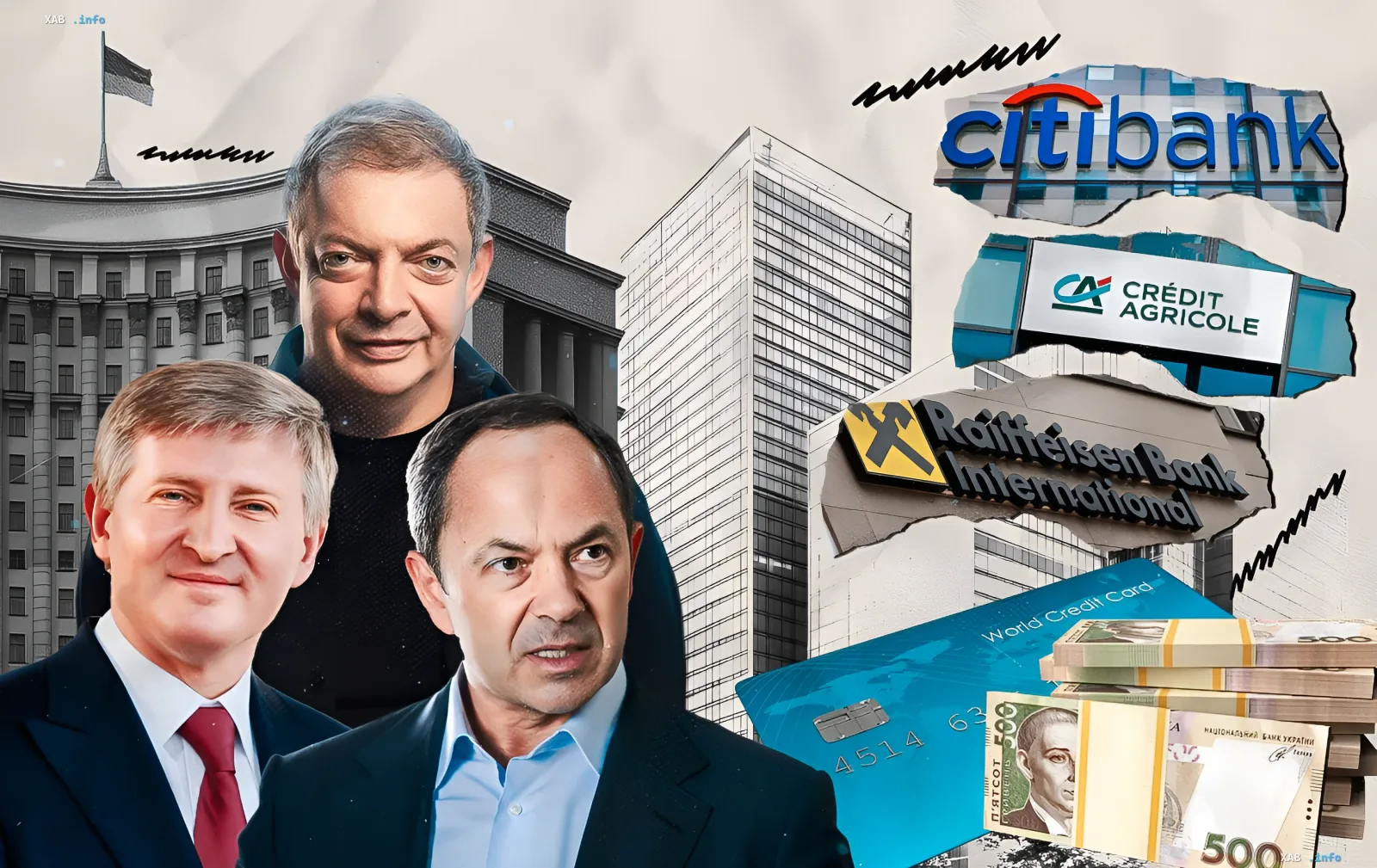
Approximately 1 trillion hryvnias in assets are managed by banks with foreign capital. The market features major international players from Austria, France, Hungary, Poland, and the USA. A prime example is the Austrian group Raiffeisen Bank International, which owns 68% of Raiffeisen Bank — the largest bank with foreign participation. A significant share (30%) is also held by the European Bank for Reconstruction and Development (EBRD).
American presence in the market is represented by Citibank, which, despite global changes, maintains its position. The French Crédit Agricole is also a key player. The presence of these groups serves as an indicator of international investors' confidence in the Ukrainian economy. Since 2022, the regulator, the National Bank of Ukraine (NBU), has strictly filtered shareholders, completely excluding citizens of Russia and Belarus from the list of significant owners (holding 10% or more).
Nationalization Policy and Sector Transformation
The history of the Ukrainian banking sector in recent years is a story of large-scale nationalizations. In December 2016, the state took control of PrivatBank, owned by Igor Kolomoisky and Hennadiy Boholyubov, due to a capital deficit of 148 billion hryvnias. Later, in August 2023, Sens Bank (formerly Alfa-Bank), owned by sanctioned Russian oligarchs, was nationalized. These steps allowed the state not only to save the system from collapse but also to redistribute assets in favor of national security, cutting off financing from unfriendly jurisdictions.
Contradictory Data
The question of the future of private Ukrainian owners remains controversial. On one hand, analysts note that even during the war, the number of those wishing to start a banking business is growing, indicating faith in the market's potential. On the other hand, data suggesting that owners of bankrupt banks do not compensate for damages creates risks for the private sector's reputation. While the state takes on the role of the "lender of last resort," private players are forced to balance between profitability and the regulator's strict capitalization requirements.