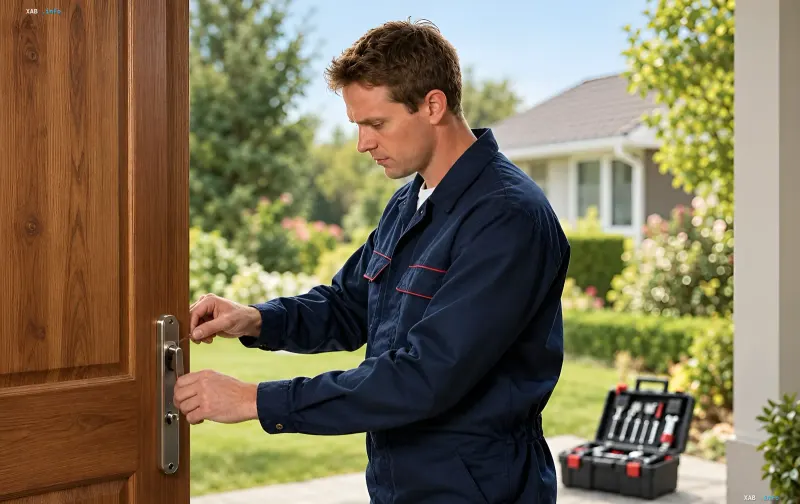
With the onset of persistent cold, many owners of private homes and apartments discover that a door lock, which worked perfectly all summer, begins to jam: the key turns with difficulty, gets stuck inside the cylinder, or requires unnatural force to turn. According to Styler, the cause is not always wear or mechanical failure — in most cases, weather conditions and lack of seasonal maintenance are to blame. Understanding exactly what happens inside a lock at sub-zero temperatures allows you to quickly restore its functionality and avoid costly repairs.
Moisture and Frost: The Main Enemy of the Lock Mechanism
One of the most common causes of seasonal jamming is moisture getting inside the cylinder. As the air temperature drops, condensation accumulates on metal parts, and during frost, it turns into ice. Moving elements — pins, tumblers, springs — become "blocked" by crystals, and the key begins to turn with noticeable effort or does not turn at all. Locks on entrance doors of private homes, garages, basements, and other premises that are constantly in contact with cold outdoor air are particularly vulnerable. The lock system manufacturer ASSA ABLOY emphasizes that regular maintenance of the mechanism significantly reduces the risk of such problems and extends the life of the cylinder.
Dust, Dirt, and Door Frame Misalignment
Besides moisture, dust and dirt accumulation inside the cylinder affects the lock's performance. Contaminants gradually build up between moving parts and hinder their movement, especially if the mechanism has not been serviced for a long time. Sometimes the problem is not related to the lock itself at all: due to temperature and humidity fluctuations, the door leaf or frame may slightly change its position. As a result, the deadbolt begins to rub against the strike plate, and the key becomes harder to turn. The Schlage website notes that door locking problems often arise precisely because of the shifting of construction elements, and it is worth checking first whether the bolt enters the corresponding hole on the frame correctly.
How to Diagnose the Cause of Jamming
Before trying to fix the problem, you need to determine under what circumstances the lock begins to jam. A practical test is simple: open the door and carefully try to turn the key. If the mechanism works fine with the door open but jams after closing, the cause is most likely related to door frame misalignment or an incorrectly positioned strike plate. If the key is difficult to insert or turn even with the door open, the problem is inside the cylinder. Repeated jamming after several attempts, as well as unusual sounds when turning the key, may indicate contamination, frozen moisture, or internal parts wear.
Proper Maintenance and Typical Mistakes
If the lock has started to feel stiff, it is strictly not recommended to try to force the key — this can lead to its deformation or breakage inside the mechanism. When ice forms inside the cylinder, it is acceptable to use a specialized lock de-icer, after checking its compatibility with the specific type of cylinder. In case of contamination or insufficient maintenance, a special product for lock mechanism care helps, but it is important to use only compounds suitable for the given type of lock — there is no universal lubricant for all mechanisms. If the key continues to jam after maintenance, it is advisable to contact a professional to avoid damaging the cylinder.
What Not to Do and How to Prevent the Problem
Among the most common mistakes that exacerbate the situation, Styler highlights pouring regular oil or thick grease into the lock: such substances accumulate dust and dirt, causing moving parts to perform even worse over time. Some manufacturers explicitly do not recommend using graphite products in their cylinders. Equally dangerous is the attempt to thaw the lock with hot water — after cooling, it freezes again inside the mechanism. Attempting to disassemble a complex mechanism without proper skills can also lead to irreversible damage. To prevent the lock from jamming in winter, check its condition before severe frosts arrive: ensure the key inserts and turns easily, and the door closes without extra effort. It is also important to monitor the state of door hinges — if the leaf has sagged or shifted, it directly affects the operation of the bolt and the entire lock assembly.