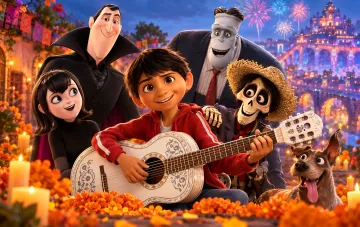
On October 31, 2026, millions of people around the world will once again immerse themselves in the atmosphere of Halloween: haunted houses, horror movies, themed parties, and frightening events draw record crowds. The paradox is that viewers and guests who consciously subject themselves to fear experience not only anxiety, but also a noticeable excitement that many describe as pleasure. Why does the brain turn a threat into a source of joy, and how does this mechanism work? Professor of Psychology Cynthia Pury from Clemson University (USA) explains.
Safety as the Key to Pleasure
According to Professor Pury, the central condition that makes fear enjoyable is the awareness of one's own safety. When a person watches a horror movie, they might flinch, scream, or cower on the couch during a terrifying scene, but deep down they know: what is happening on screen cannot cause them real harm. It is this combination of physiological arousal and cognitive control over the situation that turns fear into a source of pleasure. Without the component of safety, the exact same fear becomes pure stress rather than entertainment.
Hide-and-Seek as a Model
To illustrate, Professor Pury draws an analogy to the children's game of hide-and-seek. When a toddler, having hidden, suddenly sees an adult, they are initially startled, but immediately begin to laugh upon realizing there is no real danger. An adult visiting a haunted house or riding a roller coaster experiences practically the same sequence: a sharp burst of adrenaline, an instant assessment of the situation as safe, and a subsequent feeling of relief that the brain interprets as pleasure. Halloween essentially scales this children's game up for an adult audience, providing a socially acceptable excuse for controlled fear.
Fear Isn't for Everyone
It is important to emphasize that reactions to frightening stimuli vary greatly from person to person. Individuals with high anxiety often experience discomfort with elevated heart rates and muscle tension: for them, even 'safe' fear can escalate into a panic response. Conversely, thrill-seekers—those who regularly visit amusement parks, watch horror films, or participate in themed events—derive genuine pleasure from this state. Professor Pury notes that individual differences in tolerance to the physiological manifestations of stress determine whether Halloween becomes a source of joy or, conversely, a cause for avoidance for a particular individual.
Fear as Training, Not Therapy
Psychology experts point out that regularly experiencing frightening situations in a safe and controlled environment can promote gradual desensitization—that is, reducing the intensity of the reaction to fear. A person who consciously and repeatedly encounters 'directed' fear eventually learns to better manage their own anxiety responses. However, Professor Pury emphasizes a fundamental limitation: entertainment events, including Halloween festivals and haunted houses, cannot replace professional psychological therapy. For clinical anxiety or phobias, consulting a specialist remains the only effective path.
Halloween as a Cultural Institution of 'Safe Fear'
Together, these mechanisms explain why Halloween has transformed from a local Celtic festival into a global cultural phenomenon that gathers millions of participants every year. A day when fear becomes entertainment rather than a threat, and masks and costumes become a legitimate way to temporarily step out of ordinary reality, gives people the opportunity to experience thrills without real risk. According to Professor Pury, it is the sense of safety built into the very structure of the holiday that makes Halloween one of the few days of the year when collective fear turns into collective pleasure.