
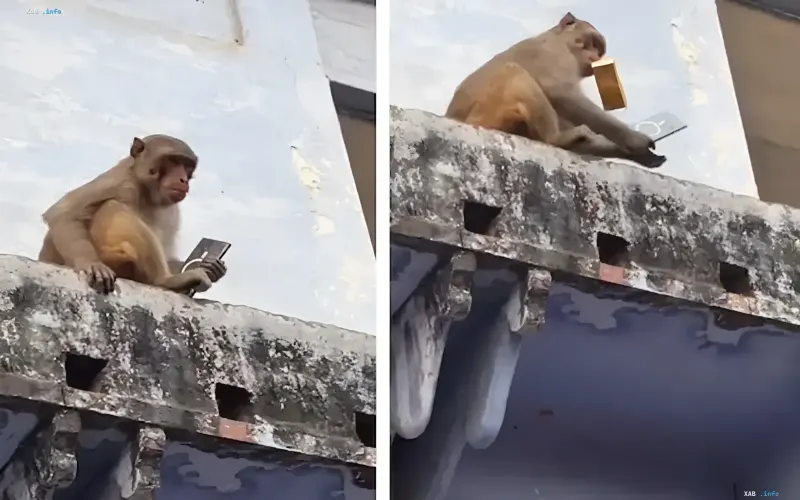
In several tourist regions of India, remarkable instances of interaction between wild animals and humans have been documented. Local primates have adapted to human presence so effectively that they have developed a unique behavioral model resembling a primitive trading system. The animals have learned to snatch valuable personal items from travelers, such as smartphones, sunglasses, and wallets, with the intention of holding them for ransom.
The Essence of the Unusual Barter
The mechanics of this interaction are strikingly deliberate. A monkey covertly or overtly takes possession of an item, then retreats to a safe distance and patiently waits for the owner's reaction. The owner can retrieve the stolen property only in exchange for food. Interestingly, the primates display remarkable selectivity: for gadgets and larger items, they demand significantly more food than for smaller accessories.Researchers' and Ethologists' Opinions
This animal behavior has drawn the attention of animal behavior specialists. According to researchers, such skills are formed as a result of prolonged and close contact with tourist traffic. Through trial and error, primates realized that stealing valuables reliably attracts human attention and allows them to easily obtain high-calorie food without expending energy on natural hunting and foraging.Contradictory Data
Despite the generally documented pattern, there are discrepancies within the scientific community and among local guides regarding the nature of this phenomenon. Some experts tend to consider this solely as spontaneous imitation and a conditioned reflex developed through food reinforcement. Other researchers argue that we are witnessing the beginnings of cultural transmission and elements of cognitive planning within macaque populations living near major religious and tourist centers in India.
Consequences for Tourists and the Ecosystem
Such animal delinquency poses serious risks to both the safety of tourists and the health of the animals. Travelers are strongly advised to remain vigilant in primate habitats, avoid provoking them by displaying valuable items, and refrain from direct contact, as attempts to independently retrieve items can trigger aggression from wild beasts.