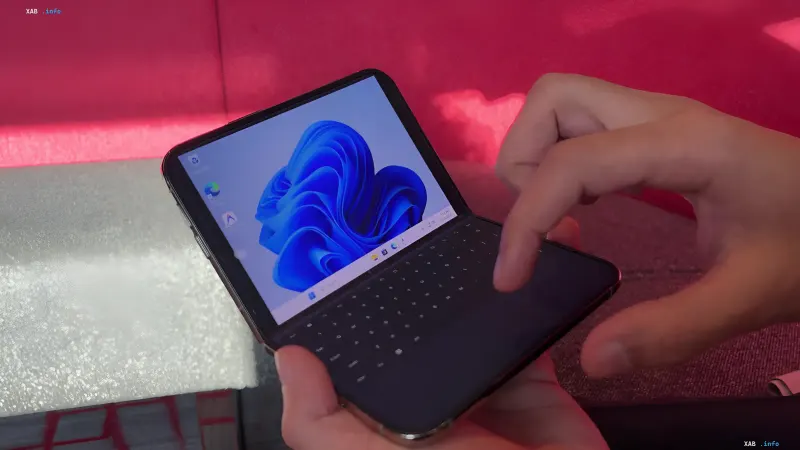
Google AI Studio Product and Design Lead Ammar Reshi publicly demonstrated an unusual engineering experiment: he managed to run full desktop Windows 11 on the foldable iPhone Duo smartphone. The project, named WindowsiOS, was created using the Gemini 4 Carbon AI model, according to the developer, and took about two hours to build. The result looks like a pocket workstation: the smartphone screen opens the familiar Windows desktop rather than the mobile iOS interface.
Google Experiment: Windows 11 in Your Pocket
The device runs the desktop version of Windows 11 build 24H2 for ARM architecture systems. The operating system runs inside a virtual machine operating directly within a regular iOS application and fully supports touch control. This means the user does not need to install third-party shells or change the firmware—simply open the app, and a full desktop interface with windows, a taskbar, and icons appears over iOS, just like on a classic computer.
How the System Works: A Virtual Machine Without Jailbreak
Special attention in the demonstration is drawn to the fact that running Windows on the iPhone Duo did not require a jailbreak. The system functions within standard iOS restrictions, utilizing application-level virtualization. According to Reshi, the performance of this configuration is close to native, but he did not present comparative benchmarks or speed measurements, so these estimates remain a single developer's claim without independent verification.
Foldable Mode: Miniature Laptop
The device looks most impressive in a half-open position. The upper half of the screen displays the Windows desktop, while the lower half turns into a virtual keyboard and trackpad. In this mode, the foldable smartphone effectively turns into a miniature laptop: one part of the screen handles information output, while the other handles input. During the demonstration, Reshi showed the Microsoft Edge browser and the Google Antigravity development environment with AI agents running, confirming that real desktop applications run on the device.
Performance and Open Source
The source code for the WindowsiOS project has been published on GitHub under the GPL-2.0 license, allowing the community to study, replicate, and improve the solution. This turns the experiment from a one-time demonstration into an open technical foundation that other developers can use for their own experiments running desktop systems on mobile devices. At the same time, the author honestly notes the absence of formal performance tests, leaving the "close to native" assessment as preliminary.
What This Means for the Market
The experiment highlights the growing capabilities of AI tools in system software development: in a matter of hours, using Gemini 4 Carbon, it was possible to build a working bridge between the iOS and Windows ecosystems. For foldable smartphones looking for use cases beyond messengers and social networks, such solutions pave the way for productive scenarios—from light development to document work. For now, this is a niche project by a single Google enthusiast, but the open source code and lack of jailbreak make it a notable signal for the entire community.