Vira Balabukh, Head of the Department of Applied Meteorology and Climatology at the Ukrainian Hydrometeorological Institute, presented an overview of the upcoming winter's climate profile in an interview with RBC-Ukraine. According to her data, winter in Ukraine is expected to be one to two degrees warmer than the climate norm this year, with this shift characteristic of all winter months. Meanwhile, precipitation levels may exceed long-term averages by 20–40%, though the structure of this precipitation will be determined by the dominance of warm Atlantic air masses. As the expert emphasizes, a quantitative increase in precipitation does not equate to abundant snow: a significant portion of the moisture will fall as rain or sleet, substantially altering the nature of the winter season for most regions of the country.
Snow cover: why lasting snow is unlikely
Balabukh's key conclusion is that the formation of stable snow cover is unlikely in a winter where air temperatures stay above zero. Even with a significant total amount of precipitation, snow will melt quickly without forming a durable and dense layer. This means that traditional winter landscapes with deep snow in central and southern regions of Ukraine are unlikely this season. Carpathian meteorologists, in particular Oleh Basarab, also reassured Ukrainians in a recent comment, stating that a harsh winter should not be expected this year.
Dangerous weather phenomena: black ice and freezing rain
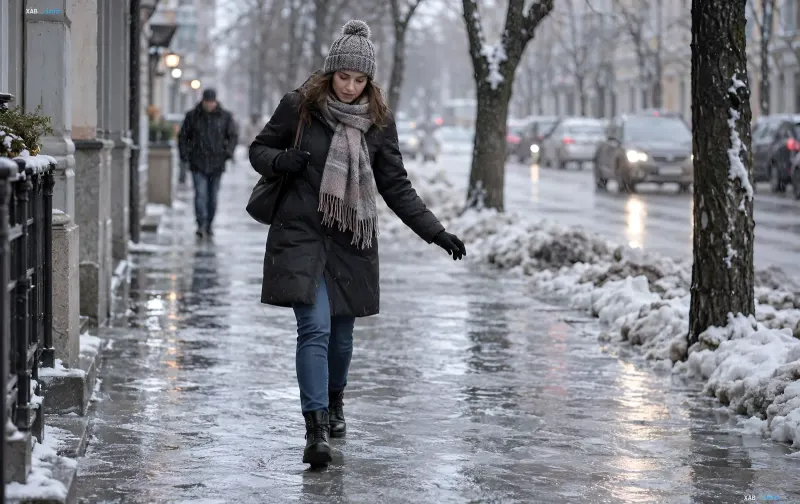
Despite the generally warm background, temperature fluctuations near the zero mark will create the most dangerous weather conditions. Balabukh points out a high probability of black ice, wet snow accumulation on power lines and trees, and freezing rain. Regions where air temperatures frequently switch between negative and positive values require special attention: under such conditions, roads, sidewalks, and infrastructure are at maximum risk. For residents of large cities, this means exercising increased caution while moving around and preparing vehicles for potential icing even during periods when the thermometer reads a slight plus.
Regional differences: from zero to minus four
The winter temperature background will vary across the country. The highest average winter temperatures are expected in southern Ukraine, Transcarpathia, as well as Kirovohrad and Dnipropetrovsk oblasts, where the average winter air temperature may range from zero to plus two degrees. Conversely, the coolest conditions will persist in the northeast of the country and the Carpathian highlands, where the average winter temperature may drop to minus three or four degrees and below. Thus, the spread of average temperatures between extreme regions will be about five to six degrees, which is typical for Ukraine, but shifted towards warming across the entire range.
Long-term context: where the climate is heading
The forecast for this winter fits into a broader climate trend. According to experts, 2025 entered the top three hottest years on record, driven by increased emissions from fossil fuel combustion and global warming. The RCP8.5 climate scenario suggests that over thirty years, the average annual temperature in Kharkiv Oblast could approach values currently typical of Crimea. This underlines that warm winters with abundant rain instead of snow are becoming not an exception, but rather the new normative regime for the Ukrainian climate, to which infrastructure and the population will be forced to adapt in the coming decades.