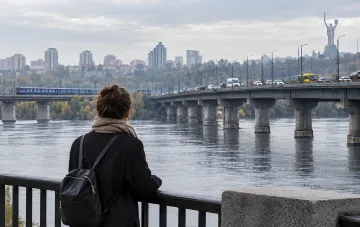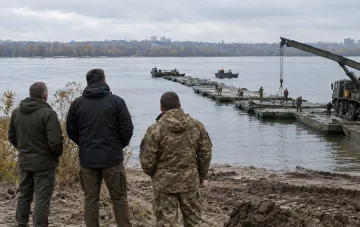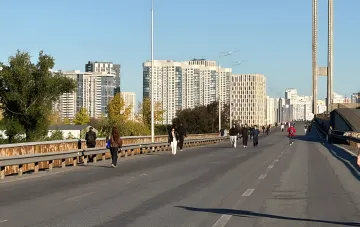
The situation with crossings across the Dnipro River in the capital of Ukraine has come into focus following a series of hostile strikes. According to experts, the simultaneous closure of several bridges in Kyiv is unlikely to lead to an immediate complete paralysis of urban infrastructure, but a combination of negative factors could cause severe consequences for the metropolis.
Population adaptation and local difficulties
As transport planning expert Dmytro Bespalov explained in an interview with specialized media, even if several crossings are blocked, a catastrophic collapse will not occur because citizens quickly adapt their habits. People flexibly respond to challenges: they give up some trips, change their schedules, routes, or switch to alternative modes of transport. Nevertheless, local traffic jams and a sharp increase in travel time for left-bank residents trying to reach the right bank are inevitable.
Risk factors: weather and energy
The real danger of a sharp deterioration in the situation arises when several crisis phenomena overlap. If the closure of the bridges coincides with a heavy downpour that impairs visibility and causes traffic accidents, as well as emergency shutdowns of public electric transport due to strikes on the power grid, the capital's transport system will face critical overloads beyond ordinary road congestion.
The threat of transport degradation of the economy
The main threat to Kyiv lies not in local traffic jams, but in the gradual strangulation of the urban economy. Constant transport fatigue and hours-long trips force qualified specialists to change their place of residence or work, moving to other cities. Experts compare this process to a chronic disease that destroys the urban environment from within much more severely than a short-term transport shock.
Consequences of recent attacks
Recall that in early October, Russian troops stepped up strikes on the capital's infrastructure. Thus, on October 2, the South Bridge was attacked, damaging a support pillar, the roadbed, and the subway protective fence, and on October 3, a strike hit the North Bridge, damaging the road surface and trolleybus contact networks, which led to temporary traffic restrictions.