On September 7, Xiaomi will hold a large-scale presentation at which the company will unveil two flagship devices at once — the foldable smartphone Xiaomi 18 Fold and the Pad 9 Pro Max tablet. As RBC-Ukraine reports, citing Xiaomi's official Weibo page, the key focus of the event will be on the brand's technological independence: the Chinese manufacturer intends to demonstrate that it is capable of designing its own high-performance chips rather than relying on Qualcomm and other external processor suppliers. This bet on an in-house semiconductor base becomes the main narrative of the upcoming event.
A new-generation foldable form factor
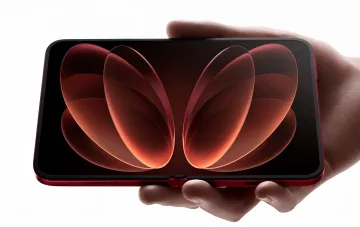
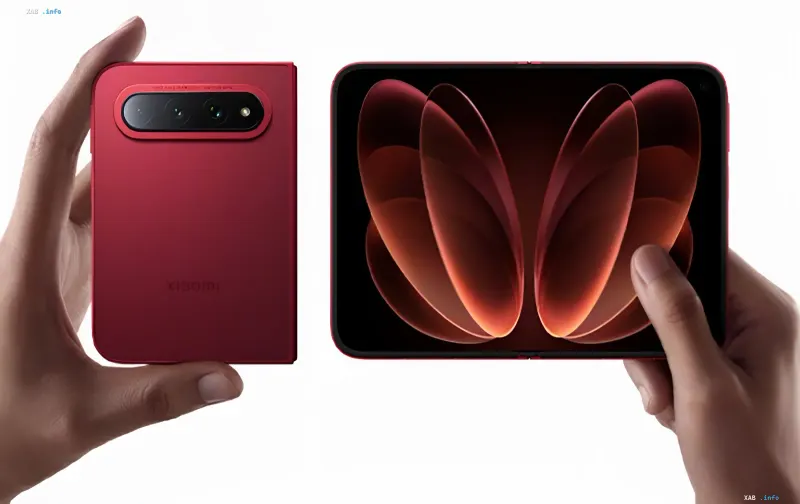
The Xiaomi 18 Fold is billed as the company's first foldable smartphone with an inwardly folding screen and an unusually wide form factor. In terms of proportions, the device, according to analysts, more closely resembles the horizontal Huawei Pura X Max than the narrow, elongated Samsung Galaxy Fold 8. The promotional images show a distinctive oval "pill" camera module on the back panel and a wide unfolded panel with a symmetrical "butterfly" wallpaper, underscoring its focus on a large internal display for multimedia and multitasking.
In-house 3-nanometer Xring O3 processor
The heart of the new smartphone will be the 3-nanometer Xring O3 chip, paired with LPDDR6 memory from local manufacturer ChangXin Memory Technologies — yet another step toward a fully Chinese technological base. The processor features a 10-core design with a maximum clock speed of up to 4.35 GHz, while the graphics are handled by a 16-core G2-Ultra NX accelerator that, according to the company, is 85 percent faster than the previous generation while consuming 64 percent less power. These specifications position the Xring O3 as a direct answer to Qualcomm and MediaTek in the top segment.
Pad 9 Pro Max tablet and benchmark results
The same flagship Xring O3 processor also goes into the Xiaomi Pad 9 Pro Max tablet. In recent Geekbench tests, the device with model number M367FC posted impressive results, confirming its orientation toward heavy workloads — video editing, graphics, and multitasking. To run stably in such scenarios, the tablet will be equipped with a battery of over 10,000 mAh and 120 W fast wired charging.
HyperOS 4 and AI features
A separate block of the presentation will be the new HyperOS 4 operating system, whose promotional materials have already appeared online. The visual design is executed in a Liquid Glass style with transparent elements, light-refraction effects, and translucent cards in the Control Center. Users will get a redesigned lock screen, widgets with grouping capability, customizable folder sizes, and an icon grid. The system includes an enhanced AI block: the Chinese version will feature an updated Super Xiao AI assistant, while global versions are expected to integrate Google Gemini. A smart keyboard with translation and text transcription, as well as an AI assistant for notes, will also appear.
Contradictory data
The provided materials contain an inconsistency in the naming of the foldable device. In most sources and in the headlines, the smartphone is referred to as the Xiaomi 18 Fold, however, in the paragraph about the HyperOS 4 operating system it is stated that it will be installed "on the Mix Fold 5 out of the box." This could mean either an alternative/internal name for the same lineup or a separate product in Xiaomi's portfolio. Until the official September 7 presentation, the company has not disclosed the exact model numbering and positioning, so both naming versions should be considered preliminary.