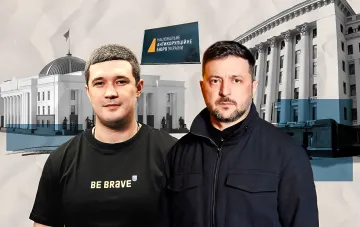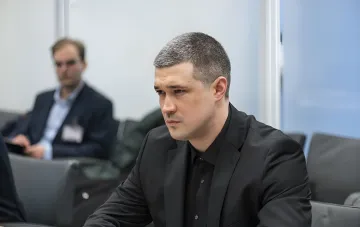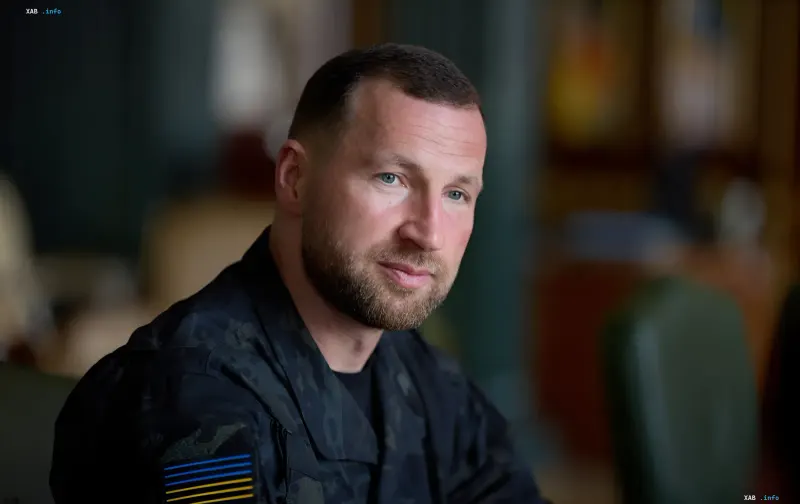
On August 18, 2026, the prolonged personnel saga in the Ministry of Defense of Ukraine came to an end. President Volodymyr Zelenskyy submitted a proposal to the Verkhovna Rada to appoint Yevhen Khmara as Minister of Defense. The vote, which is scheduled to take place tomorrow, August 19, will mark the end of a month spent in an acting capacity following the resignation of Mykhailo Fedorov. The decision to appoint Khmara was the result of complex political compromises and attempts to stabilize the situation in this key ministry against the backdrop of the ongoing conflict.
Fedorov's resignation and the personnel crisis
The situation regarding the leadership of the Ministry of Defense intensified in mid-July when President Zelenskyy announced a major overhaul of the Cabinet of Ministers. Prime Minister Yulia Sviridenko resigned along with the government, and the head of 'Naftogaz', Serhiy Koretsky, was appointed as the new head of the government. However, the post of Minister of Defense became the center of intrigue. Mykhailo Fedorov, who held this position, found himself at the center of a conflict with the command of the Armed Forces, in particular with the Commander-in-Chief, Oleksandr Syrsky.
According to the President, this conflict was the reason for Fedorov's resignation. The former minister himself confirmed that he had proposed replacing the Commander-in-Chief, but Syrsky claimed to be unaware of any disagreements. After Fedorov's resignation, protests began at the Franko Theatre building in Kyiv, with participants demanding his return to the post and Syrsky's resignation. In turn, Zelenskyy replaced the Commander-in-Chief with Mykhailo Drapaty, but did not return Fedorov to the position of minister.
The candidacy of Yevhen Khmara: why him?
When it became clear that Fedorov would no longer be the Minister of Defense, the candidacy of the then-head of the Ministry of Internal Affairs, Ihor Klymenko, was considered. However, he refused this position and became the Secretary of the National Security and Defense Council (NSDC). In the end, Zelenskyy chose Yevhen Khmara, who at that time was the acting head of the SBU. Since the appointment of a minister is impossible without the consent of parliament, Khmara first became the acting head of the Ministry of Defense.
According to sources in the Rada, the decision to appoint Khmara was not easy. In the presidential circle, there was an idea to leave him in the status of 'acting' for some time to avoid attracting unnecessary attention to personnel issues against the backdrop of protests. However, at the Presidential Administration (Bankova), they decided to formally close this story. Deputies from 'Servant of the People' note that 'there is no one else to appoint,' and Khmara, despite having served in a different structure, is quickly getting up to speed with the ministry's affairs.
Contradictory data
There are disagreements regarding the prospects of Khmara's appointment. On the one hand, sources in the relevant committee of the Rada predict that votes in favor of his appointment will be found. On the other hand, there are concerns in the Rada that the vote may not pass due to ongoing protests and demands to return Fedorov. Furthermore, a legal question arises: Khmara is a military officer, and according to legislation, the head of the Ministry of Defense must be a civilian. How exactly this issue will be resolved is currently unclear.
Khmara's team: what will change in the Ministry of Defense?
The full composition of the new minister's team is not yet known, but interlocutors in the relevant committee of the Rada believe that there will be no radical changes. Some people will remain from the previous team of Mykhailo Fedorov. Other informed sources confirm this information. According to deputies, the general feedback about Khmara is positive both as a specialist and as a person. His main trait is integrity, and no one from the SBU has ever spoken ill of him.
Results and prospects
The appointment of Yevhen Khmara as Minister of Defense will be an important step in stabilizing the situation in the Ukrainian government. Despite contradictions and protests, the decision to appoint him was made after long consultations and compromises. It remains to be seen how the vote in the Rada will go and what changes will occur in the structure of the Ministry of Defense.