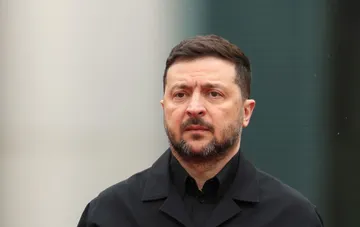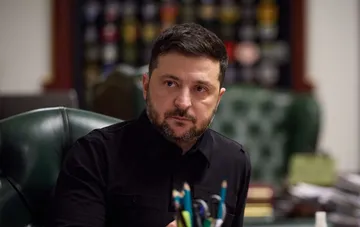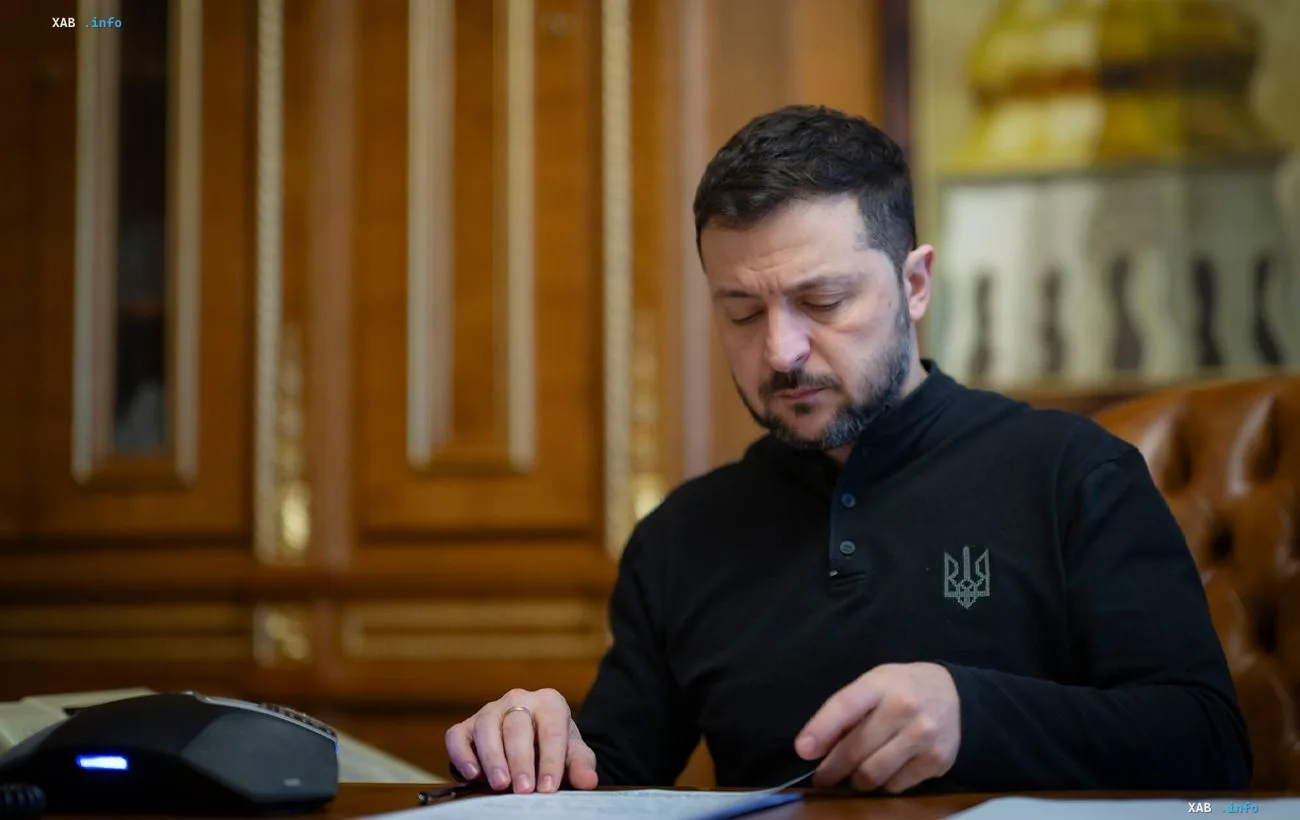
In a recent interview with The Wall Street Journal, Ukrainian President Volodymyr Zelensky spoke openly with the publication's editor-in-chief Emma Tucker, acknowledging that he had made numerous mistakes over the years of the full-scale war. In his own words, the reason lies in the enormous flow of complex decisions and agreements that he has to make almost every day. "Of course, I make mistakes. In wartime you make a lot of mistakes. Why? Because you have to... How does President Trump put it? Make a deal? You have to conclude hundreds of agreements every day," RBC-Ukraine quotes him as saying.
Admitting mistakes: hundreds of decisions a day
Zelensky emphasized that such decisions are often complex and highly sensitive, and sometimes — contrary to his own convictions. "Sometimes you know you don't even want to do it, but you have to," the president added. At the same time, he did not specify which exact decisions he considers mistaken, limiting himself to a general description of the managerial burden during combat operations. At the end of the conversation he stated that, in the end, everything comes down to one's attitude toward one's own work, country, and people: "It all revolves around people. People give you the energy to live. And there are people you hate — and they take away all your energy."
Stress and the question of surviving in office
In response to Tucker's question about how he is currently coping with the stress after years of war, Zelensky answered bluntly: "I don't know. I'm not sure I'm really coping with it." He also noted that he tries to do his job in such a way that after the war and his presidency end, he will be able to remain in his country and walk its streets in peace. This phrasing became one of the most quoted fragments of the conversation and was picked up by Ukrainian and foreign media.
Contradictory data
There is a noticeable discrepancy in how different outlets present the material. The primary verbatim quote, relayed by RBC-Ukraine citing WSJ, records only the admission of mistakes and doubt about the ability to cope with stress — there is no direct phrasing about "deteriorating health" in it. At the same time, a number of other outlets (Life, Rambler, Osnmedia) interpret these same words as a statement about the president's worsening well-being and health, allegedly due to constant stress. Thus, the "just stress and mistakes" version and the "deteriorating health" version coexist in the news field: the first relies on the verbatim quote, the second on the editorial interpretation of that same quote. Readers should bear in mind that the medical phrasing is not confirmed by Zelensky's direct words in the available quotes.
Context of the statements: Odesa, Kharkiv, Dnipro
On the same day, Zelensky made a number of statements about Russia's military objectives. According to him, Vladimir Putin intends to seize Odesa, Kharkiv, Dnipro and other Ukrainian cities, and it is precisely from the Russian leader, in the Ukrainian president's assessment, that war and instability spread across the world. These statements came against the backdrop of ongoing combat and became part of the broader rhetoric on the scale of Russian aggression.
Crimea and the international order
Earlier, Zelensky had also emphasized that without the return of annexed Crimea under Ukrainian control, it is impossible to restore normal life and the principles of international law. In his words, it was the occupation of the peninsula in 2014 that became the point after which Russia began to show disrespect for the world order. The totality of these statements — from admitting his own mistakes to accusations against Moscow — forms a picture of the president's public position, combining personal acknowledgment of managerial fatigue with hard geopolitical rhetoric.