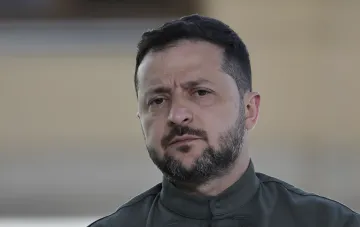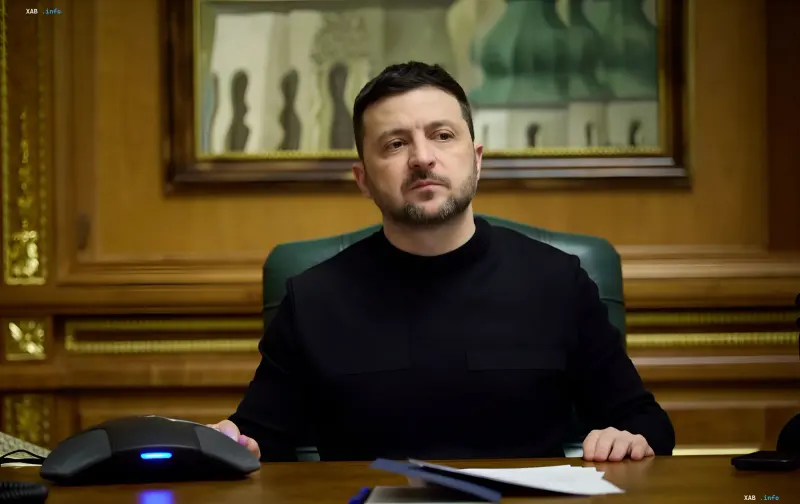
Ukrainian President Volodymyr Zelensky, while reviewing military reports on air defense, set a specific quantitative goal for the Ministry of Defense and the Armed Forces: by autumn, the interception rate of Russian drones must be raised above 90%. The statement came against the backdrop of unprecedented intensity in Russia's use of drones, which, according to the head of state, amounts to a systematic tactic of exhausting Ukraine's infrastructure and population.
Scale of the Attacks: Nearly 1,500 Drones in Four Days
According to figures cited by Zelensky at the meeting, Russia deployed roughly 1,500 unmanned aerial vehicles of all types against Ukrainian territory in just the past four days. Of this total, around 800 were jet-powered drones — the most difficult category to intercept. The president emphasized that Ukrainian defenders are successfully shooting down a significant share of these targets, but the current intensity of the attacks is forcing a reassessment and expansion of air defense capabilities. In Kyiv's assessment, Moscow's tactic is one of constant pressure: regular mass drone raids are intended to wear down both the technical resources of air defense and the psychological resilience of the civilian population.
Jet-Powered Drones: The Main Vulnerability and the Aerial Shield
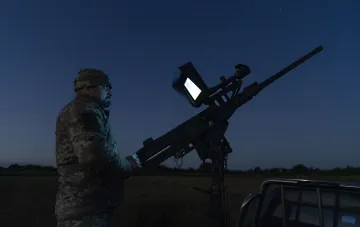
A separate block of the report focused on the problem of jet-powered drones specifically. Zelensky acknowledged that these present the greatest challenge for interception: at the current stage, the sky against jet-powered targets is defended primarily by fighter aviation, rather than by surface-to-air missile systems or anti-aircraft artillery. This means that each interception of a jet-powered drone by aircraft comes at a high cost and carries significant risks for the aircrew. At the same time, Russia is steadily increasing the share of jet-powered drones in its attacks, thereby compensating for the declining effectiveness of classic 'Shaheds' when used in mass, as the density of the target stream exceeds the capacity of traditional air defense means.
Four Developer Companies and a Plan to Scale Interceptors
Ukraine is already actively working on developing specialized interceptors to counter jet-powered drones. According to information presented at the meeting, the relevant development is being carried out by four Ukrainian companies, with the most successful system at present belonging to one of them. Earlier, four potential interceptors were tested in real conditions against jet-powered 'Shaheds.' The Ministry of Defense intends to bring these developments to serial production as quickly as possible and scale output to thousands of units, in order to ensure reliable interception of every type of Russian drone. 'Right now, both the Ministry of Defense and the military as a whole must do their utmost so that we have as much capability as possible to shoot down each type of Russian drone,' Zelensky emphasized.
Context: Air Defense Shortages and an Appeal to International Partners
The task of achieving a 90% interception rate by autumn is set against public statements by Kyiv about a shortage of air defense resources. In recent weeks, Zelensky and other officials have repeatedly appealed to Western partners to accelerate deliveries of air defense systems and components for their maintenance. In particular, following nighttime strikes on Ukrainian cities, Kyiv has stressed that the current volume of deliveries does not match the pace and nature of Russian attacks. Thus, the domestic task of building homegrown interceptors and external pressure on allies to obtain additional air defense systems form a two-tier strategy for protecting the airspace, the implementation of which, as envisioned by the country's leadership, is to be completed by the end of 2026.